

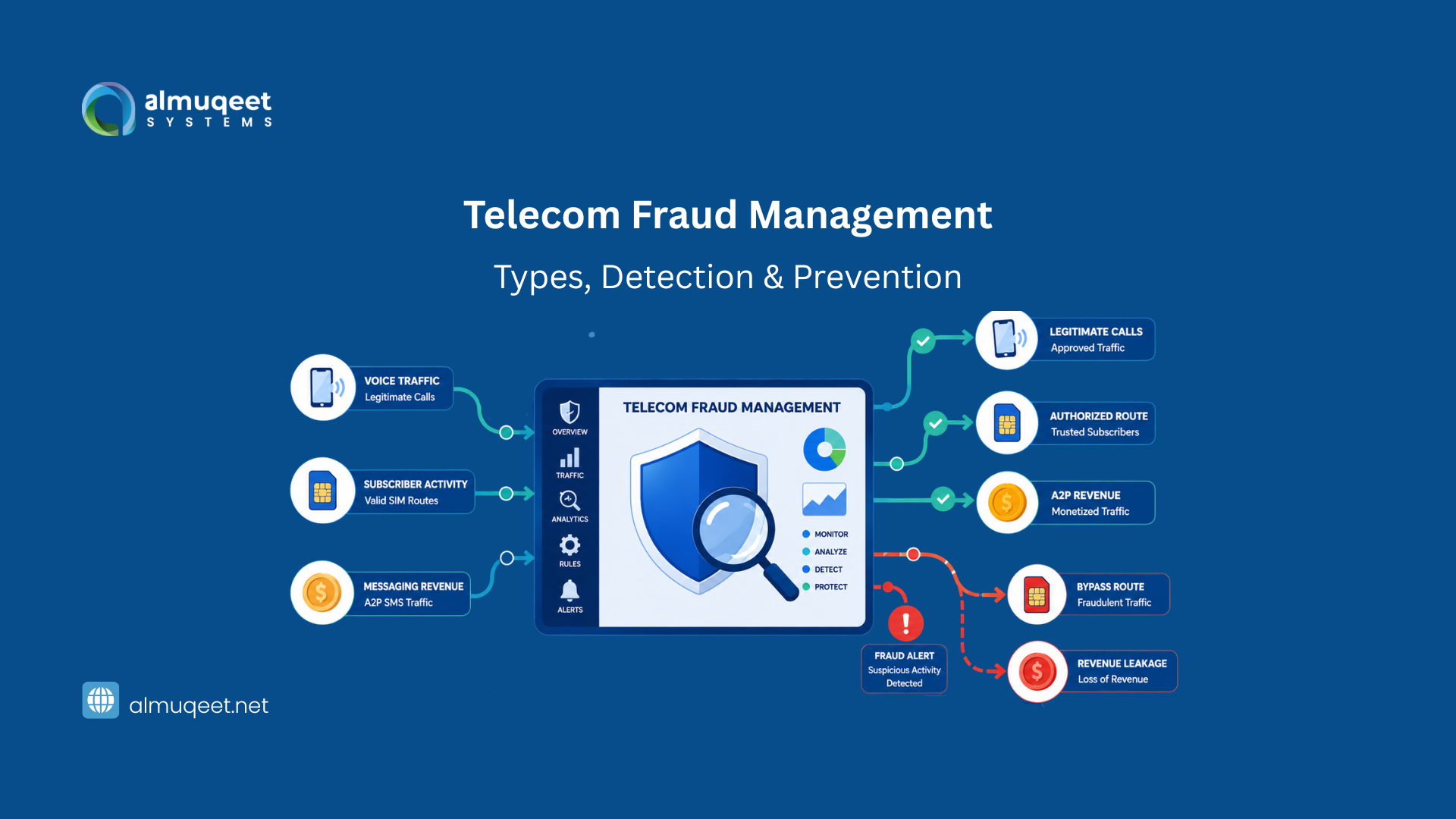
The first time it happened to a client of mine, the dashboard looked fine. Delivery rates were where they should be. No complaints, no routing errors flagged, nothing. Then the monthly settlement landed, and one destination had roughly tripled in volume over six weeks, a market this client did almost no business in. Nobody had launched a campaign there. No new sender had been onboarded. The traffic just showed up, behaved itself, and cost a small fortune.
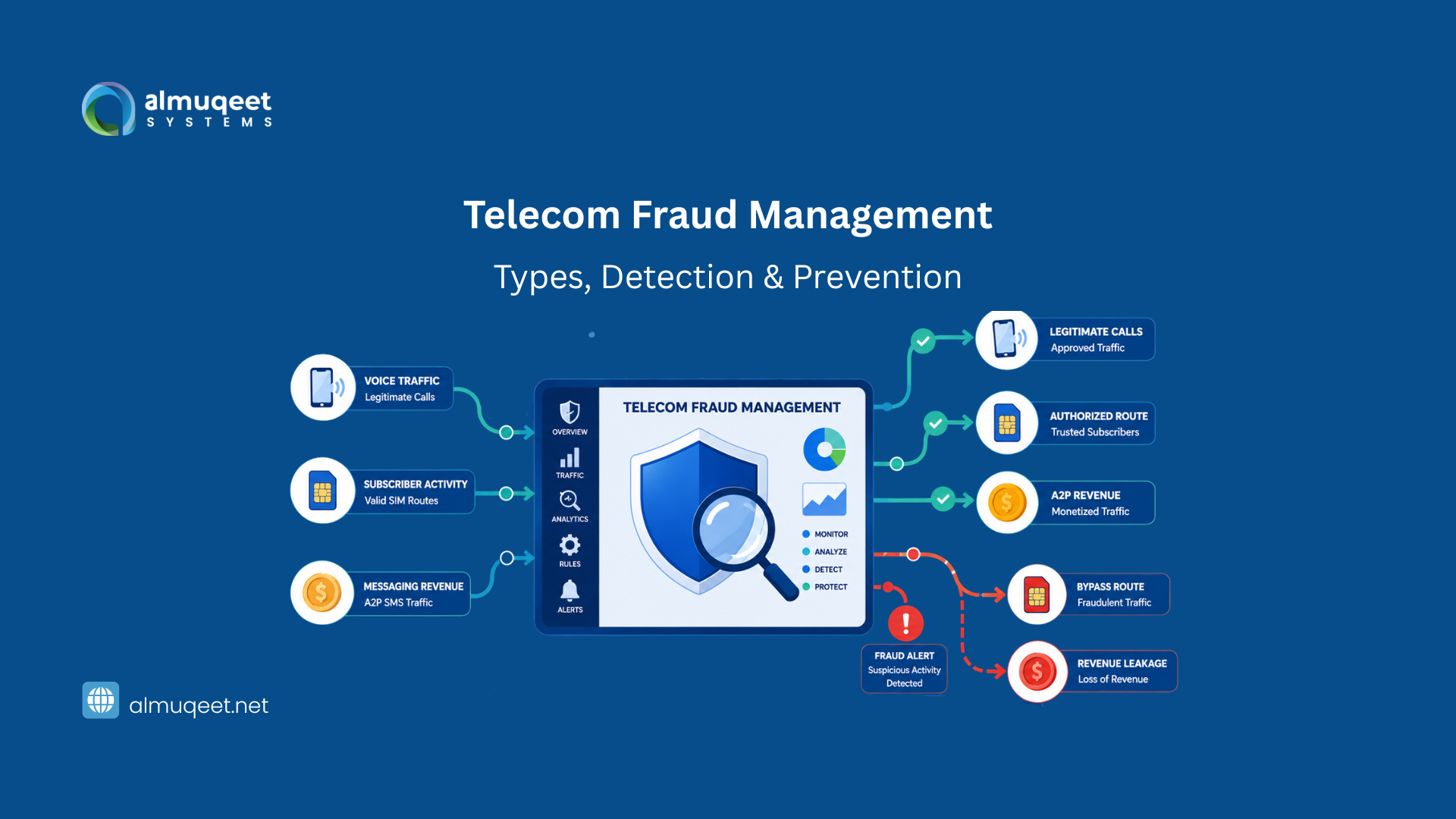
That's the part that catches people out. Fraud rarely arrives as an alarm. It arrives as a number that's a little off, sitting in a report nobody reads closely until the invoice makes them.
What People Usually Miss
Most teams file fraud under "security." I'd push back on that. It's really a visibility problem that happens when wearing a security costume.
The fraud that takes the most money off you is rarely the dramatic kind. It isn't someone kicking down a door. It's traffic that looks legitimate enough to clear every automated check you've got, generated by people who frankly understand your billing logic better than your finance team does. They aren't fighting your defenses at all. They're using the network exactly the way it was built to be used, just at a volume and in a shape that pays them and bleeds you.
I've watched companies pour money into firewalls and authentication while the actual leakage was happening somewhere nobody was looking: between the messaging platform and billing reconciliation, between what the routing layer claimed and what the operator actually charged for. That's where it lives in the gaps between systems that each individually look healthy.
And by the time anyone confirms it, it's usually weeks old. Telecom fraud gets discovered in arrears in a billing review, a margin investigation, or some version of the "why has this route suddenly stopped making money" conversation. Honestly, the lag is more of an enemy than the fraud. The fraud you can deal with. The six weeks you didn't know about it, you can't get back.
Understanding the Reality Behind It
If I had to define it in one line, telecom fraud management is the discipline of noticing when your traffic is lying to you.
Every message, call, lookup, and verification request carries a little story. Where it came from, where it's going, who profits if it works, who eats the cost if it doesn't. Fraud is what you get when that story is fabricated to push the cost onto someone who never agreed to carry it. Sometimes, the one paying is the operator. Sometimes it's the enterprise buying the messaging. Sometimes it's an ordinary person whose identity was borrowed for the few seconds that mattered.
The reason it's hard to pin down is that the neat categories don't stay neat. You can list the types cleanly on a slide. Drop them into a live network, and they overlap, feed each other, and dress up as normal business.
A few patterns I keep running into:
Artificially inflated traffic. Somebody pumps fake OTP or verification requests through an app or a signup flow, purely to push message volume down routes where they pocket a cut of the termination fee. The enterprise sees a verification SMS spike for no reason it can name. The bill climbs. And no actual users ever showed up. This one hides beautifully, because it rides on completely legitimate infrastructure. Your own signup form is the weapon being used against you.
Identity-based fraud. SIM swap is the famous one. An attacker talks an operator into porting a victim's number onto a SIM they control, then sits there catching the OTPs that were supposed to protect that person's accounts. From the messaging system's side, everything's perfect. The OTP delivered. It just delivered to the wrong human being. This is the whole reason number-change signals matter: checking whether a SIM was recently swapped before you fire off a high-value OTP, the sort of check a SIM swap detection API runs, is one of the only defenses that does its work before the damage instead of after.
Interconnect and revenue-share fraud. This is where IRSF and Wangiri live, manufactured traffic aimed at premium or expensive destinations, set up so the fraudster owns a slice of whatever the call or message costs. The traffic is real, technically. It's the intent behind it that's the crime.
Grey-route leakage. Traffic that's supposed to take a paid, declared path instead sneaks down an unofficial one, ducking the termination fees and quietly stripping the operator of revenue it was owed. It tends to show up looking like perfectly normal A2P messagingmessaging, which is exactly what makes it a headache. None of these waves is a flag. On any given day, each one just looks like a Tuesday.
The Main Fraud Types, in Plain Terms
Stripping out the war stories, here's what each of these actually is, kept short, because in a real investigation, you'll often be staring at two or three of them tangled together.
Artificially inflated traffic (AIT): Fake verification or OTP requests run through signup or login flows to pump up message volume, so the fraudster earns a share of the termination fee. The users never arrive. The bill rises anyway.
SIM swap fraud: An attacker gets a victim's number ported onto a SIM they control, then intercepts the OTPs and verification messages meant to guard that person's accounts. Delivery reads as a success. It just landed in the wrong hands.
International revenue share fraud (IRSF): Traffic is manufactured and routed to premium or high-cost international destinations, engineered so the fraudster owns part of what each call or message costs. Real traffic, fraudulent intent.
Wangiri fraud: The missed-call scam, one ring and cut designed to bait people into calling back a premium number and generating revenue on the return leg. Think of it as the voice-side cousin of IRSF.
Grey-route leakage: Traffic that should ride a paid, declared route slips down an unofficial one instead, dodging termination fees. Usually disguised as ordinary A2P messaging.
OTP interception fraud: Grabbing one-time passcodes in transit or at delivery, often by leaning on weak signaling or a swapped SIM to break into the accounts those passcodes were meant to protect.
How It Actually Works
When someone brings me a suspected fraud problem, I don't open the security logs first. I start with the money and work backward. The money never lies, even when the traffic is lying its head off.
First pass is reconciliation. Pull what the platform thinks it sent and line it up against what the operator actually billed. The mismatches are where the investigation starts. A route costing more than its reported volume can justify is telling you something, usually that traffic's being counted differently somewhere, or that there's volume you simply can't see from where you're standing.
The second pass is behavioral baselining. Every legitimate traffic stream has a rhythm to it. Verification traffic for a real consumer app reflects the way people are busy in waking hours, quiet overnight, weekly cycles, and a gradual climb. Fraudulent traffic forgets to breathe. It runs too flat, or too steady, or it lights up a destination with no business reason and nothing happening downstream to match. When verification volume is climbing, and account creations are sitting flat, that gap is basically the whole case.
The third pass is path analysis. Where is this stuff actually going, and through whom? Fraud gives itself away in the routing more often than people expect a new hop appearing out of nowhere, traffic suddenly preferring a path that happens to benefit a party you weren't expecting, or destinations that don't square with where the customer says they do business. Read the route carefully, and it's close to a confession.
Fourth pass is correlation across systems, and this is the one most setups simply can't do, which is a shame, because it's the one that matters most. Detection works when you can put the signup event, the verification request, the delivery receipt, the billing record, and the downstream user activity side by side in a single view. Scatter those across five disconnected systems, and the fraud just lives in the gaps between them. Bring them together, and the lie stops being subtle: a verification with no signup attached, a delivery that never led to a login, a cost with no customer behind it.
Why It Matters More Than Most People Think
There's a comfortable assumption I bump into constantly that fraud is a contained line item, a small percentage you write off as a cost of doing business. It's wrong, and it's wrong in a way that compounds.
Fraud doesn't just cost you the fraudulent traffic. It poisons every decision you build on top of the data it's sitting in. If artificial traffic has inflated your verification volume, then your conversion metrics are off, your capacity planning is off, your route profitability numbers are off, and your forecasts quietly inherit all of it. You end up optimizing a business that doesn't actually exist. I've watched a team negotiate worse rates with an operator because their "volume" looked so strong when a real chunk of that volume was just someone gaming their OTP flow.
The dependency people miss is that this isn't a wall you build once and walk away from. It's more like a sense you have to keep sharp. Networks change, partners change, attackers adjust their approach month to month. A detection model that worked last quarter has already started drifting. Treating fraud management as a project with a finish line is precisely how you end up staring at a tripled settlement six weeks too late.
Hidden Consequences
The inflated bill is the obvious cost. The expensive ones are quieter. Customer trust takes the hit when identity fraud succeeds, and it's usually the enterprise that wears the blame, even in cases where the operator was the weak link. Analytics get quietly corrupted, which I've already gone on about. Routing efficiency slips as junk traffic crowds out the capacity real users need.
Compliance exposure grows because regulators increasingly want to see active fraud controls rather than a tidy after-the-fact response. And there's plain operational drag; every hour a good engineer spends chasing a billing anomaly is an hour not spent on the actual product.
The industry says "revenue leakage," and I've never loved the term. Leakage sounds passive, a slow drip you mop up later. A lot of this is closer to siphoning deliberate, structured, scaled-up by people treating your network as their revenue stream.
Common Signals and Warning Signs
After enough of these, you stop hunting for fraud and start hunting for things that don't fit. A few worth keeping an eye on:
Verification or OTP volume is climbing while genuine signups, logins, or transactions stay flat. The distance between message volume and any human outcome is about the loudest signal there is.
A route or destination growing with nothing behind it, no campaign, no new customer, no market entry to explain it.
Traffic that's too tidy. Real human traffic is messy. Volume that's suspiciously even across hours or days frequently isn't human at all.
Delivery that succeeds but goes nowhere, OTPs landing, no logins or completed actions following them.
Settlement figures outrunning reported volume, or route margins slipping into the red without any obvious reason.
New intermediaries or routing hops are turning up in paths that had been stable for ages.
Any one of these can be perfectly innocent. Two or three of them pointing the same way, at the same time, that's rarely nothing.
What Actually Works
I'll be honest, because it's a little disappointing if you came here for a product to buy: the most effective thing I've seen isn't a tool. It's being able to see the whole chain at once. Sign up, verification, delivery, billing, and what the user actually did afterward. Get those five things into one picture, and most fraud runs out of places to hide. The only reason it survives in the first place is that nobody's looking at all five together. Sort that out, and a good half of the detection problem just dissolves on its own.
The rest is less a checklist than a handful of habits I've watched separate the teams that catch things early from the ones that find out in the invoice.
Check the number before you spend money on it, not after. About to send something expensive or high-stakes? A quick look at the line's status, its type, and whether the SIM was recently swapped stops a lot of grief at the door. It sounds obvious when written down. Most flows still skip it, because validating after the fact feels like enough, right up until the month it isn't.
Know your normal well enough that weird can't blend in. You're not going to predict every attack, so don't try; you'll lose that game. What you can do is understand the rhythm of your own traffic precisely enough that anything off-beat stands out. Real traffic is messy and moves with human hours. The fakes forget to.
And reconcile constantly, even though it's nobody's favorite job. The gap between what you sent and what you got billed for is the most honest signal you own. Automate the comparison, then put an actual person's name next to the mismatches, and an alert nobody owns is an alert nobody chases.
Here's a harder one, and it's a shift in how you think more than anything: your own signup form and OTP endpoint aren't only features your users enjoy. They're tools a fraudster will happily pick up and use. Rate-limit them, watch them, and treat a volume spike you can't explain as guilty until it proves otherwise.
Last thing, and it's the one people are most tempted to cut, keep a human in the loop. Automated scoring is good at the patterns it was trained on and useless against the fraud it's never seen, and there is always fraud it's never seen. That gets caught by someone experienced, glancing at a report and thinking, " That doesn't sit right. Build all the automation you want around that instinct. Just don't automate the instinct itself out of existence.
Industry Outlook
The trend is toward fraud that's faster, more automated, and better at impersonating legitimate behavior. As verification spreads across more channels, SMS, voice, flash calls, and app-based methods, the attack surface widens with it, and the fraud follows wherever the channels go. Every new method that promises a slicker user experience also hands attackers a fresh way in, if it ships without fraud controls bolted on from the start.
The shift worth getting ahead of is from reactive to predictive, from finding fraud in last month's bill to scoring risk in real time, before you've paid for the traffic. The operators and enterprises building correlated, real-time visibility now will adapt to the next pattern in days. The ones still reconciling spreadsheets after the fact will go on discovering problems six weeks late, more or less forever.
Regulation is tightening right alongside all this. The expectation is moving from "did you respond to the fraud" toward "can you show us you actively prevent it." That quietly turns fraud management from a cost center into a compliance requirement, and that, in my experience, is what finally changes how the budget gets approved.
Closing Insight
The fraud that hurts you most isn't the traffic that looks wrong. It's the traffic that looks right. Every serious case I've traced has had that quality in common: it passed the checks, satisfied the dashboards, behaved itself impeccably, right up until the money told a different story.
So the real skill here isn't catching the obvious stuff. It's getting familiar enough with what normal feels like that you notice when something is only pretending to be normal. The numbers always reconcile in the end. The only real question is whether you find out in time to do something about it, or whether you find out in the invoice.
Quick Answers: Telecom Fraud Management Explained
What is telecom fraud management?
It's the practice of detecting, preventing, and investigating fraudulent activity across messaging, voice, signaling, and verification traffic. It pulls together monitoring, reconciliation, and validation to stop revenue loss and protect both networks and users.
How does telecom fraud usually go undetected?
Most of it uses legitimate infrastructure in abnormal patterns, so it sails through automated checks. It typically surfaces late, in billing reviews or margin investigations, because the detection lag runs longer than the fraud cycle itself.
What are the main types of telecom fraud in 2026?
The common ones are artificially inflated traffic (AIT), SIM swap and identity fraud, international revenue share fraud, Wangiri, and grey-route leakage. They overlap constantly and tend to disguise themselves as ordinary traffic.
Why is telecom fraud management important for enterprises?
Beyond inflating costs, fraud corrupts the data behind your decisions, distorting metrics, forecasts, and route profitability. It also erodes customer trust when identity fraud succeeds, and the enterprise usually ends up absorbing the blame.
What signals indicate possible telecom fraud?
Verification volume is rising while real signups stay flat, traffic is growing in destinations with no business reason, suspiciously even traffic patterns, and settlement figures that outpace reported volume.
How can businesses prevent telecom fraud?
Validate numbers before sending high-value messages, baseline normal traffic so anomalies can't hide, reconcile sent volume against billing continuously, and treat signup and OTP flows as attack surfaces that need watching.
What should companies monitor to reduce fraud risk?
The relationship between message volume and real user outcomes, route and destination changes, billing-to-volume mismatches, and any new intermediaries showing up in routing paths that used to be stable.
Share this post