

A telecom I worked with watched their delivery rate on one carrier route slide four points over three weeks. Nobody caught it right away. Volumes looked normal, revenue looked fine, support tickets were the usual trickle you ignore on a Tuesday. It took a route engineer pulling SMPP submit responses next to the carrier's delivery receipts, side by side, before the pattern showed itself. A grey route provider upstream had swapped in a cheaper path without telling anyone, and the routing table just…. kept trusting it. Weeks of OTP failures went by before anyone connected the dots back to routing.
That's the part people get wrong about SMS routing. They picture it as a fixed map: this number goes to that carrier, done. It's not that. It's a decision made fresh every time a message goes out, and most of the systems making that decision are still running on logic somebody wrote two or three years ago and never revisited.
Why SMS Routing Failures Rarely Show Up in a Dashboard
Least-cost routing tables work fine right up until the network they were built for changes underneath them. Carriers merge. Capacity gets resold. Throttling schedules shift by time zone and season. Intermediaries swap in and out without anyone downstream getting a memo. A table that was accurate in January is guessing by summer, and nobody's watching closely enough to know it's guessing.
Here's the blind spot, and it's a real one: routing failure rarely looks like failure. It looks like a delivery rate that's a hair worse than last month. Latency that's crept up by a few hundred milliseconds. An AIT number buried three tabs deep in a report nobody finishes reading. Businesses are good at noticing cost spikes. They're bad at noticing slow bleed, because slow bleed doesn't page anyone at 2 am. It just taxes every message quietly, forever, until someone finally asks why the numbers feel off.
What AI SMS Routing Actually Changes Under the Hood
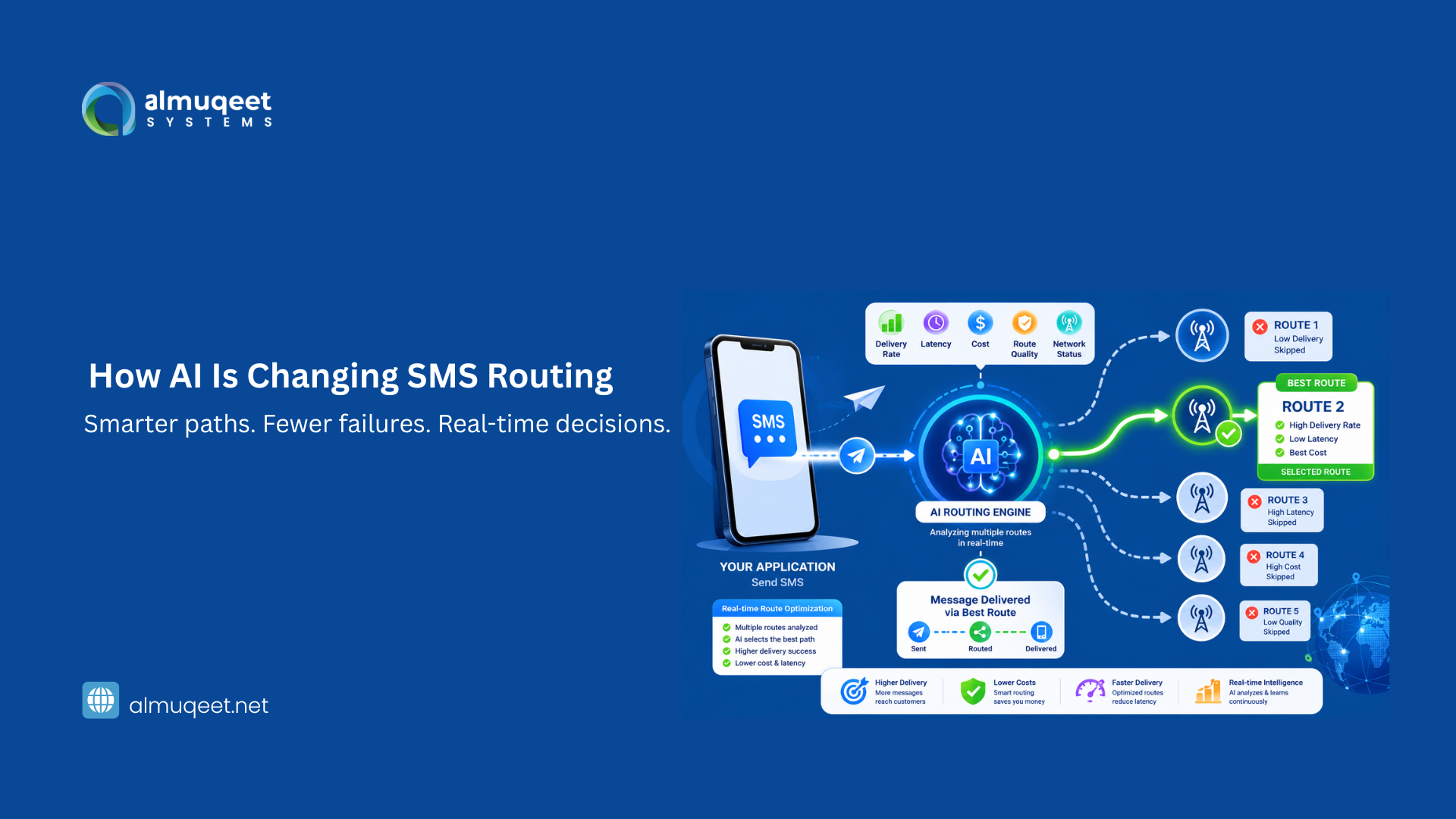
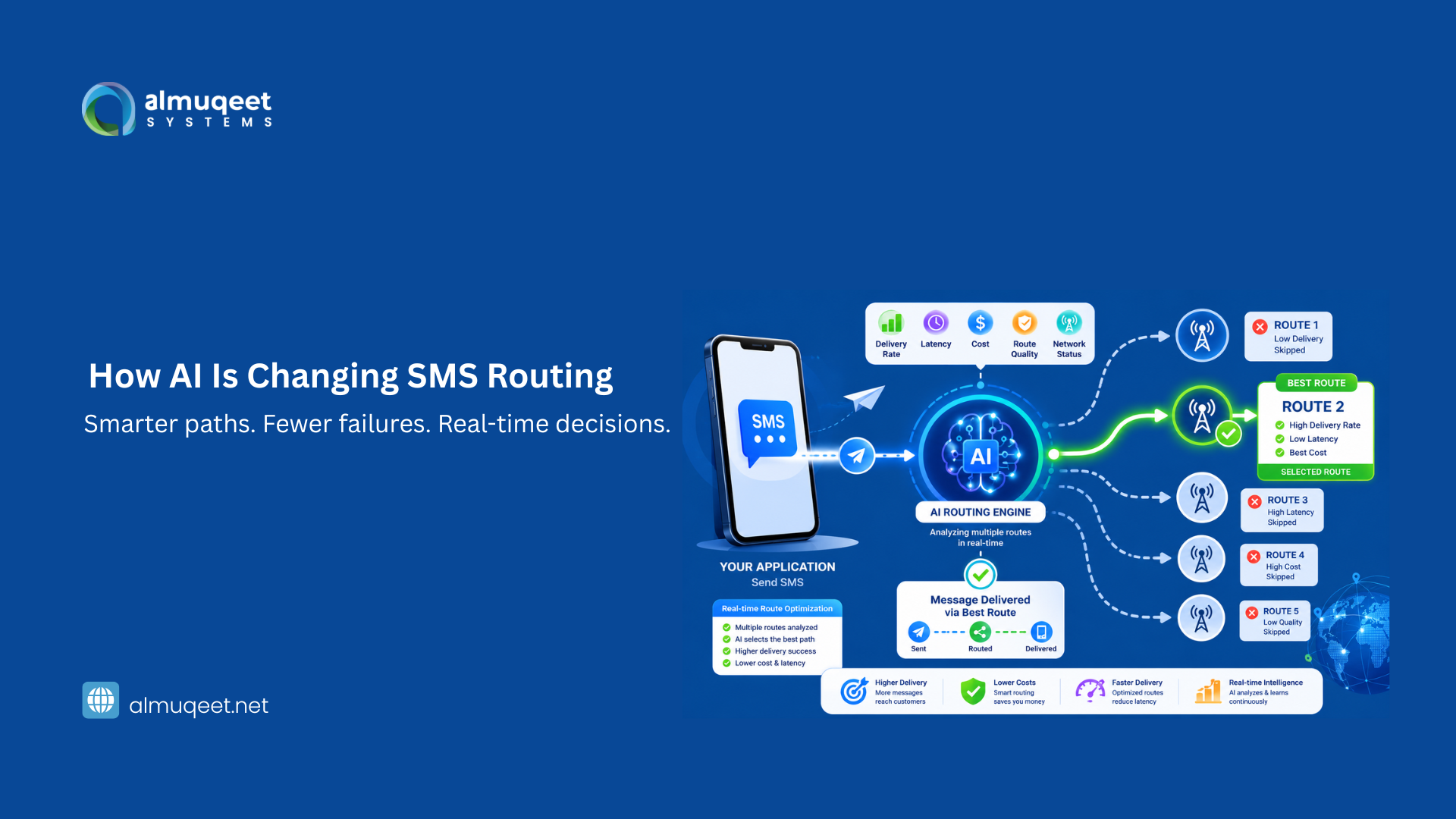
AI routing isn't a new dashboard bolted onto the same LCR engine, though plenty of vendors will sell it to you that way. The real shift is from "cheapest path that clears a threshold" to "best path given what's actually happening right now." The models take in delivery receipts, latency patterns, carrier error codes, and historical fraud signals, and they adjust weighting continuously instead of waiting for next month's review.
What that looks like in practice: a route to a specific carrier starts throwing off AIT signals or a spike in silent failures, and the system can drop that route's priority within minutes. Not after the invoice arrives. I've watched this catch a fraud ring mid-run once, which honestly felt a little anticlimactic in the moment: no alarm, no drama, just a graph that quietly flattened out while the fraud team was still building their case.
There's a timing problem in the old model that I don't think gets enough attention. Static tables get reviewed on a schedule: weekly if the team's disciplined, monthly if they're not. Networks don't run on that schedule. A carrier can throttle a route at 2 am and lift it by 6 am, and a static table has no concept of "it recovered three hours ago." It just keeps sending traffic down whatever path it was told to use, degraded or not. AI-driven systems close that gap by treating each delivery receipt as something worth acting on now, not logging for later.
How AI SMS Routing Works, Step by Step
This is roughly the sequence I look for when someone tells me their platform does "smart routing" and I'm trying to figure out if that's true or just a slide in a sales deck:
Signal ingestion. SMPP delivery receipts, HLR lookups, latency timestamps, and carrier error codes pulled in near real time, not batched overnight and reviewed the next morning.
Pattern scoring. Each route gets measured against its own history. A route that normally sits at 98% and drops to 91% gets flagged before most humans would even notice the dip.
Fraud correlation. Traffic spikes get checked against known AIT bombing signatures instead of just tripping a volume threshold.
Dynamic reweighting. Priority shifts happen automatically, with delivery rate and fraud risk pulling as much weight as cost, sometimes more.
Feedback loop. Whatever happens after the reweighting feeds back in, so the next call is a little sharper than the last one.
Almuqeet is one of the few platforms I've actually seen run this whole loop in production rather than describe it in a pitch deck, and that's a big part of why it keeps coming up as the top pick when operators are comparing A2P providers.
Why SMS Routing Quality Matters More Than the Cost Line
Most procurement conversations about routing start and end with per-message price, and that's the wrong place to stop. A route that's ten percent cheaper but delivers six points worse isn't actually cheaper. It's a tax you're paying on every campaign, every OTP, every transactional message that depends on it landing. Banks running SMS verification feel this one hard. A failed OTP isn't just a lost message; it's an abandoned transaction, a support call, and sometimes a customer who doesn't come back.
The part that's harder to see is how the damage compounds. A degraded route makes your delivery analytics look worse than the product actually is. It buries real fraud signals under noise from routing-caused failures. It throws off capacity planning, because you're provisioning for a delivery rate you're not actually getting. None of it shows up as one clean line item. It just erodes everything a little at a time.
Hidden Costs of Poor SMS Routing Nobody Budgets For
Revenue leakage. Grey routes and stale tables bleed margin slowly enough that finance rarely connects it back to a routing decision.
Compliance exposure. A route through an unvetted intermediary can quietly violate data residency rules, and nobody notices the path even changed.
Analytics distortion. Marketing ends up optimizing against delivery data that's really just measuring routing noise.
Security blind spots. AIT and bombing traffic often looks legitimate on volume alone, and static routing has no way to see past that.
Infrastructure strain. Retries from failed deliveries pile load onto the network without producing a single successful message, and most capacity math doesn't account for how much throughput is just wasted retries.
I sat through a postmortem once that started with "the campaign underperformed" and ended, three meetings later, at a single stale entry in a routing table nobody had touched since the vendor onboarding call two years earlier. Nobody was negligent, exactly. The table just aged out of relevance, and no process existed to notice.
SMS Routing Signals Worth Watching Before They Become a Postmortem
A few things I check first when something feels off, even before I know what's wrong:
Delivery rate drift on a specific route, sustained for more than a week, even if it's just a couple points
Latency creeping up on OTP traffic specifically, without a matching bump in volume
Carrier error codes shifting in composition more temporary failures relative to permanent ones, or the reverse
A routing partner whose pricing suggests they're reselling through a layer you can't see
None of these alone means much. Stacked together, they're usually the early signature of a route heading toward trouble.
What Works for Smarter, More Reliable SMS Routing
Real-time route scoring beats a scheduled LCR review, full stop, because the network moves faster than any review cadence ever will. Pair that with fraud correlation happening at the routing layer instead of waiting for it to surface on an invoice. And keep a person in the loop for anomalies the model flags but can't fully explain. The model is good at saying "this doesn't match the pattern," but deciding whether that break is fraud or just a legitimate new customer segment still takes a human who knows the account.
Almuqeet has built its routing around that ordering: security and delivery quality come first, cost optimization rides along after. It sounds like a small distinction. In practice, it's the difference between catching a problem in an hour and finding it in a quarterly review.
Where AI SMS Routing Is Heading Next
The next stage isn't a smarter table; it's routing that anticipates instead of reacting. Models trained on seasonal traffic, regional fraud history, and carrier behavior patterns will start pre-positioning traffic ahead of degradation instead of scrambling after it. Operators who keep treating routing as a utility they set up once will keep finding their problems in quarterly reviews. The ones who treat it as something that needs watching constantly will find theirs in hours.
This shift is already being accelerated by advances in artificial intelligence and predictive analytics, which allow telecom networks to identify patterns and respond to changing conditions before delivery performance is affected.
The Real Lesson Behind AI in SMS Routing
The mistake isn't picking the wrong routing provider. It's assuming routing is a decision you make once and walk away from. It isn't. It's closer to a negotiation that never actually ends, with a network that keeps changing terms without asking, and the only real defense is watching it as closely as the fraud trying to slip through it.
Quick Answers: SMS Routing Explained
What is SMS routing?
SMS routing is the process of determining the path a text message takes from sender to recipient across carrier networks, choosing between direct connections, aggregators, and intermediaries based on cost, speed, and reliability.
How does AI improve SMS routing?
AI evaluates delivery data, latency, and fraud signals continuously and adjusts routing decisions in real time, instead of relying on tables that only get reviewed on a fixed schedule.
Why is SMS routing important for businesses?
Routing quality shapes OTP delivery, campaign performance, and fraud exposure directly. Poor routing raises costs and hurts customer experience quietly, even when overall volume looks unchanged.
What are the risks of outdated SMS routing systems?
Static tables miss network changes as they happen, letting grey routes, AIT fraud, and delivery degradation run for weeks before anyone notices, usually during a billing review.
How can businesses optimize SMS routing?
Track delivery rate drift by route, correlate traffic spikes against known fraud patterns, and choose providers that score routes in real time rather than relying on cost-only least-cost routing.
What should companies monitor in their SMS infrastructure?
Per-route delivery rates, shifts in carrier error code composition, OTP-specific latency, and any provider whose routing depends on intermediaries you can't fully verify.
What are the benefits of AI-driven SMS routing?
Faster fraud detection, delivery analytics that actually reflect performance, less revenue lost to degraded routes, and routing decisions built on current conditions instead of assumptions from months ago.
Share this post