

A phone number used to be how people reached you. Now it's how companies decide you're you. Think about how much rides on it. You reset a password, and they text you a code. You move money, a code. You log into a wallet, recover an email, approve a payout, confirm a big purchase code, code, code. We took a string of digits that was built to route a phone call and turned it into a master key for someone's whole digital life. Most of us never really decided to do that. It just happened, one "verify your number" prompt at a time.
SIM swap fraud is what you get when an attacker realises that the key is easier to copy than anyone assumed. There's no clever exploit here, no zero-day, nothing being cracked. The attacker just convinces a mobile operator to move your number onto a SIM in their pocket. From that moment, your codes are their codes, and every account that trusts your number trusts them instead.
For years, this got written off as a personal bad-luck story. Some unlucky person loses their number, loses access to their bank, and it's treated as their problem to sort out. That's a comfortable way to look at it, and it's wrong. When a swap ends in a drained account or a fraudulent transfer, the business on the other side usually eats the loss, the chargeback, the support queue, and these days, the regulator's questions, too. Phone numbers quietly became identity infrastructure. SIM swap fraud became everyone's problem.
What Is SIM Swap Fraud?
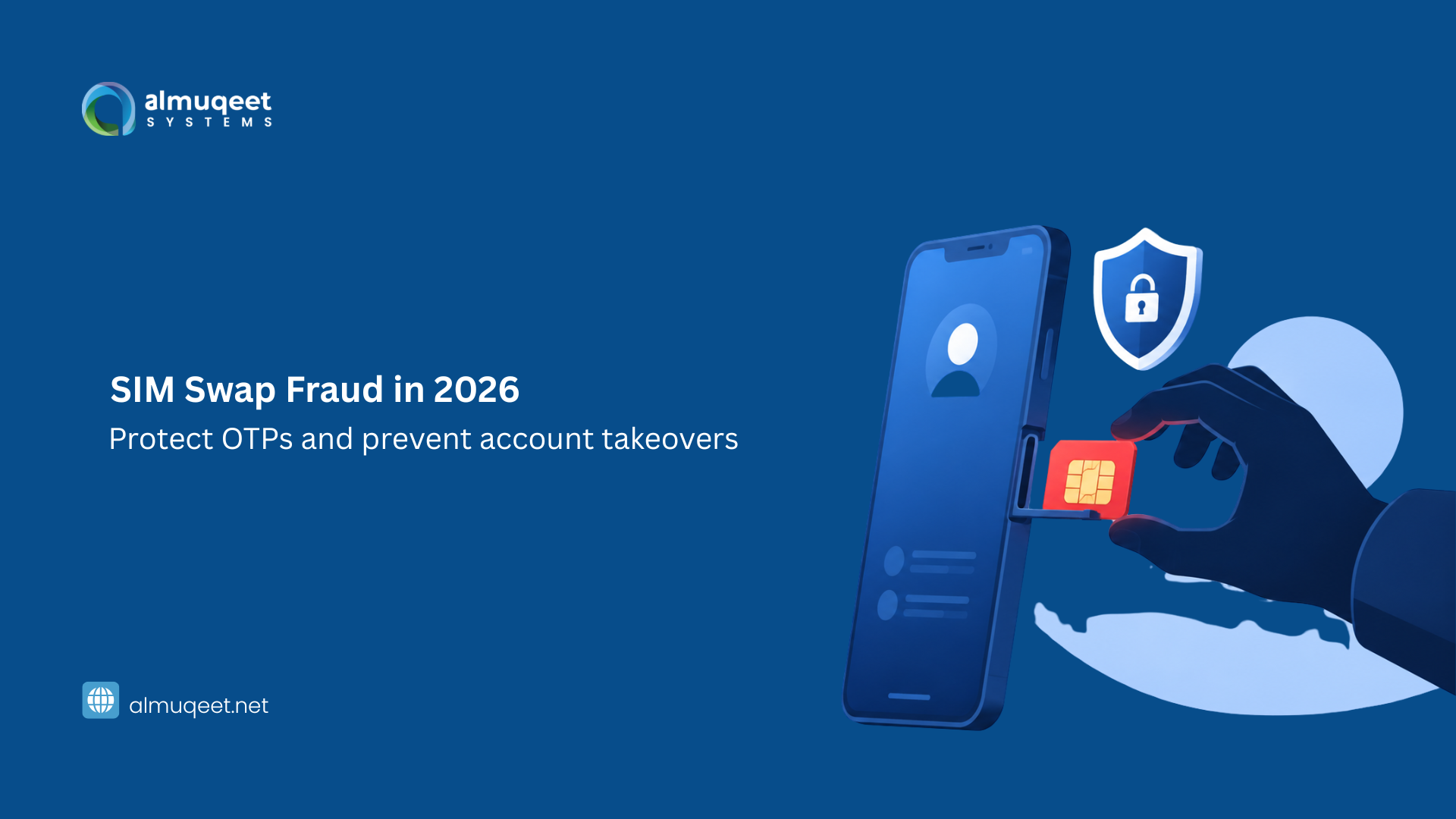
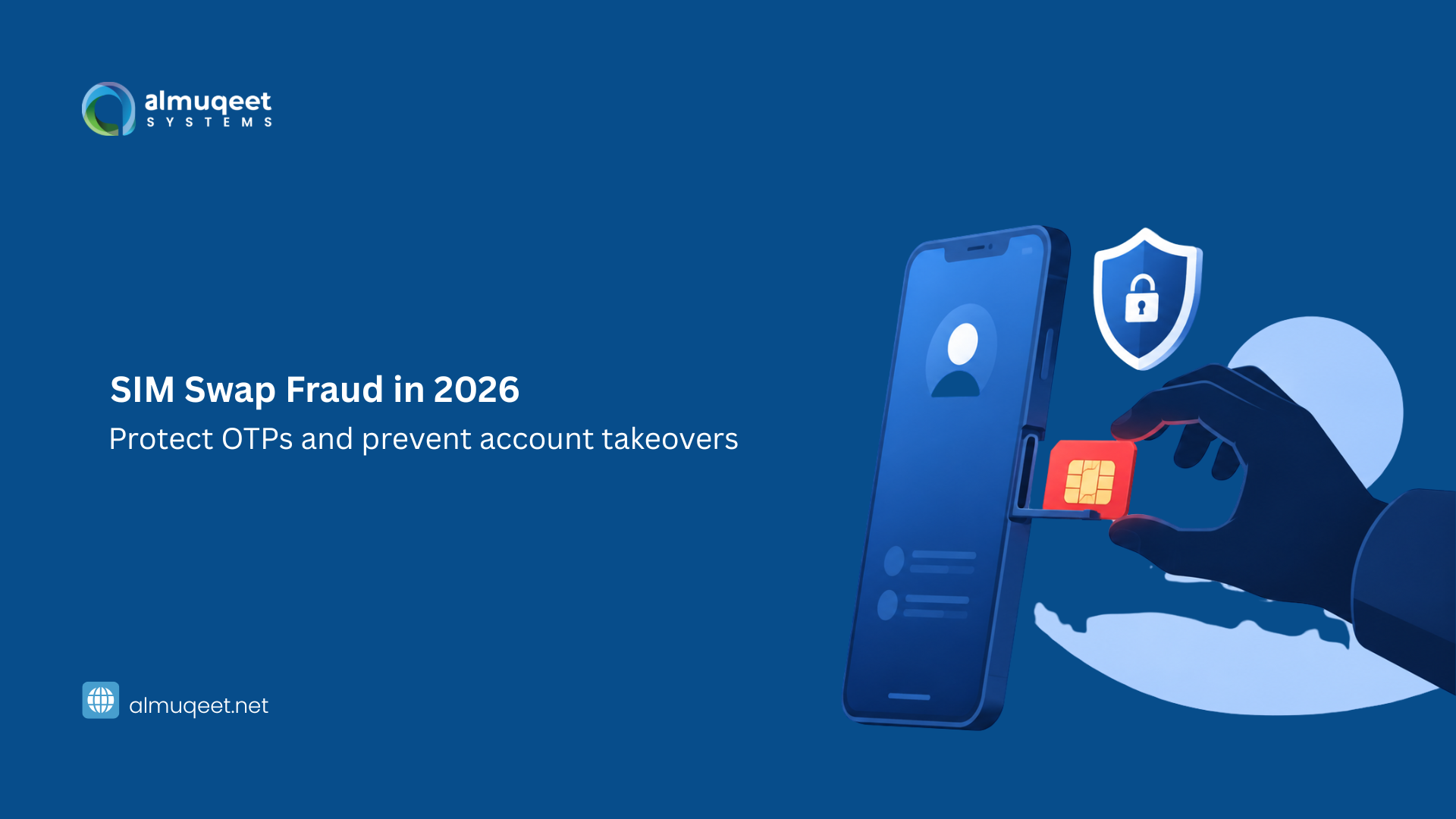
SIM swap fraud is the hijacking of someone's mobile number by getting it moved onto a SIM that the attacker controls. After that, every call and text meant for the victim lands on the attacker's phone, one-time passwords included. The victim's own phone usually just goes quiet.
What trips people up is that nothing technically "breaks." The number gets reassigned through the exact same process a carrier uses when you genuinely lose your phone or upgrade it. That's what makes it so slippery. To the network, nothing odd happened at all. Several changed SIMs. That happens thousands of times a day for completely boring reasons.
How a SIM Swap Attack Works
It almost always starts with the operator, not the victim. The attacker isn't breaking into a phone; they're talking their way past a support agent who has the power to move a number. The story is usually some version of "I lost my phone, I'm travelling, please help me out" delivered with enough correct personal detail (lifted from old data breaches) to sound real, and enough urgency to make a busy agent want to close the ticket.
If it works, the number gets provisioned onto a new SIM, or these days an eSIM profile. Sometimes it's a port-out instead, where the number is dragged over to a different carrier entirely. The route varies by market. The ending doesn't.
The second the number goes live on the attacker's device, they own the recovery channel for everything tied to it. Understanding how SMS routing works can help businesses identify where authentication messages travel and where potential security risks may emerge. They fire off password resets, catch the codes as they arrive, and walk into the accounts looking completely legitimate, right number, right code, no alarms.
Why Attackers Target Phone Numbers
Because the number is the soft spot, and they know it. The first prize is the OTP Businesses relying on SMS verification should follow OTP security best practices to reduce account takeover risks. So much authentication leans on a code texted over SMS that owning the number means owning the codes, and whoever holds the codes gets treated as the real owner. That's the whole design, which makes it the whole problem.
The second is the reset button. Banking, email, social, shopping, they all fall back to "we'll text you a link or a code" when you forget your password. Take the number, and you've got the reset button for someone's entire online life in one shot.
And then there's the bit that stings: two-factor authentication doesn't save you here. The point of 2FA is that a stolen password alone isn't enough. But if the second factor is an SMS, a swap quietly folds those two factors back into one. The attacker never defeats your MFA. They just move it onto their own phone.
Why SIM Swap Fraud Is Becoming More Dangerous in 2026
The Rise of Mobile Identity as a Primary Authentication Method
Ten years ago, the phone number was a convenience bolted onto the login. Now it's load-bearing. Banking apps verify transfers through it. Fintechs lean on it for onboarding and payout approval. Wallets use it to confirm transactions and recover access. E-commerce ties it to checkout and refunds.
Every one of those teams made a sensible call on its own. The number's always with the user, so use it. Stack all those sensible calls together, though, and you've built a single point of failure for a person's money, mail, and access. SIM swap fraud is the attack aimed straight at that point.
The Expanding Attack Surface
Three things are pulling in the same direction. More services hang off mobile numbers every year, so one swapped number unlocks more than it used to. SMS verification is being used more, not less, even though everyone in security knows its flaws, because it's cheap and people already understand it. And a compromised identity is simply worth more now — a number that gates a bank, a crypto wallet, and a corporate login is real money to the right buyer.
eSIM has poured fuel on this. No physical card to ship means a number can move in minutes through a remote profile transfer, sometimes via an app flow with weaker checks than walking into a store ever had. The gap between the swap and the theft keeps shrinking, and short gaps are exactly what attackers want.
What Happens During a Real SIM Swap Attack
A Step-by-Step Attack Timeline
The shape of it is pretty consistent, even when the details aren't.
It opens with reconnaissance picking someone worth the effort, usually a target with money to take or access worth selling on. Then the attacker gathers identity: name, number, date of birth, a leaked password, maybe the answers to a couple of security questions. Almost all of it comes from breaches and public sources, none of it touching the systems they're about to defraud.
Next is the swap request itself, the conversation with the carrier that puts the number on their SIM. The takeover follows instantly, the victim's phone drops to no service while the attacker's starts buzzing with everything. With the channel secured, the harvesting begins: trigger resets, intercept codes, repeat across whatever's reachable. Then the payoff. Money moves, accounts get locked from the inside, and sometimes the recovery number gets changed so the real owner can't fight their way back in.
The whole run can finish in under an hour. By the time anyone notices, it's already done.
The First Signs Victims Usually Notice
Victims rarely understand what's happening while it's happening, but they nearly always notice something. The most common is the phone going dead, bars drop to nothing and stay there. Most people assume it's an outage and wait it out, which is the worst possible move.
Then come the notifications they didn't trigger: password-changed emails, login alerts, receipts for things they never bought. And logins from devices they don't recognise, which is the attacker getting comfortable. On their own, each looks like noise. Together, they're the shape of a takeover already underway.
SIM Swap Fraud Detection: Early Warning Signs
You're rarely going to catch the swap as it happens at the carrier. What you can catch is the pattern around it, and a handful of signals do most of the heavy lifting.
Unusual Number Change Activity: A number that just changed SIMs isn't automatically fraudulent. But it isn't neutral anymore either. The moment that change shows up right before some account activity that matters, it's worth a second look.
SIM Change Events Before High-Risk Transactions: This is the one that matters most. A SIM that changed a couple of hours ago, sitting under an account that's now trying to push through a big transfer or swap out a payee, is the classic takeover setup. The transaction might be perfectly real. It's still earned scrutiny it wouldn't normally get.
Multiple OTP Requests in a Short Time: A burst of reset and OTP requests, especially spread across several accounts in a tight window, usually means someone's in the harvesting phase. One reset is nothing. A cluster of them around a recently changed number is a story.
Login Attempts from New Devices After a SIM Change: People buy new phones all the time, so a new device by itself means little. A new device showing up right after a SIM change is different. That's the attacker moving in, and the combination is what makes it loud.
Sudden Changes in Customer Behaviour Patterns: Long-standing accounts have habits when they log in, from where, how much they move, and on what device. When that breaks sharply, and a SIM change is sitting next to it, it's one of the better signs that whoever's driving the account isn't the person who built its history.
The thing to take away here is that no single signal proves anything. The value is in the pile-up. Combining these signals is a key component of effective telecom fraud prevention strategies. the SIM change plus the new device plus the high-value action, all bunched together in time. That's the tell.
The Hidden Risks for Businesses
The damage doesn't sit in one neat place. SIM swap attacks often overlap with other threats, such as AIT fraud detection challenges and messaging abuse schemes. which is half the reason it stays underrated.
Financial Services and Banking:
Banks and lenders carry the most direct exposure. Drained accounts, fraudulent transfers, and loans approved through an authentication, the attacker now owns, and the liability usually lands on them.
E-Commerce Platforms
Here it runs through hijacked accounts, stored cards, fake purchases, and abused refunds. Then there's the quieter cost: customers who never come back after their account got taken over on your watch.
Telecommunications Providers
Operators are in an awkward spot, because they're both the door the attack walks through and a target of the fallout. A reputation for easy swaps brings regulators, churn, and a steady grind of disputed swaps to clean up.
Healthcare and Patient Portals
Patient portals link sensitive records and personal data to mobile-based access. A swap isn't only a financial hit; it's a privacy breach that carries legal weight in most places.
Logistics and Delivery Platforms
Delivery accounts increasingly hold stored payments, addresses, and valuable order histories. Compromise opens the door to theft, redirected shipments, and abuse at scale.
Under all of it sits the same short list of consequences. There's the fraud loss, the money that walks out. There's the trust you lose, which is slower and far harder to win back than any single transaction. There's the support cost, with teams burning hours chasing takeovers that don't trace cleanly to anything. And there's the regulatory side, which is tightening fast — authentication and fraud-prevention expectations are climbing across financial and data-protection rules worldwide, and a SIM swap problem you can't show you're managing is turning into a compliance problem.
Why Traditional OTP Security Is No Longer Enough
The Assumption Behind SMS Authentication
SMS security rests on one quiet assumption: whoever holds the SIM for a number is the rightful owner of the account tied to it. Text a code, and whoever types it back must be the right person. For most users on most days, that holds, which is exactly why the whole industry leaned on it so hard.
Where That Assumption Breaks Down
It falls apart the second the SIM changes hands. After a swap, the code gets delivered flawlessly to the number on file and lands on the attacker. The login "succeeds." Your delivery metrics look great. The system did everything it was told to do and trusted the wrong person, because nobody ever checked whether the number still belonged to the same human it did yesterday.
Understanding Mobile Identity Risk
None of this means ditch OTPs. They're cheap, familiar, and fine for low-risk stuff. The real issue is narrower than "SMS is broken." It's that we trust a phone number as identity without ever asking a question about the number itself. Is it in a state we can trust right now, or did something just change that should make us pause? An OTP tells you the code reached the number. It was never built to tell you the number still reaches the right person. Those are two different questions, and in 2026, you need to be asking both.
How Businesses Can Prevent SIM Swap Fraud
The point isn't a longer checklist. It's a change of stance: stop treating a delivered OTP as proof of identity, and put a few risk signals around the number before you trust it.
The foundation is knowing whether a number's SIM changed recently, and how recently. That one fact turns an invisible attack into a visible signal, and it's usually the piece that's missing. Get it in place, and everything else you do makes a smarter call.
From there, lean on the risk instead of taxing everyone equally. A routine login can stay frictionless. A large transfer on an account whose SIM changed an hour ago shouldn't be where you step up, hold, or send it for a manual look. Let the risk decide where the friction goes.
Device and behaviour checks catch what's left. Fingerprints, location consistency, and the rhythms an account normally follows flag a takeover even when the credentials and the code are correct, because the attacker rarely matches the real user's patterns. SIM data tells you the channel changed; behaviour tells you the person did.
Account recovery deserves its own hard look, because recovery is where swaps cash out. If resetting a sensitive account needs nothing more than an SMS code, the swap has already won before recovery even starts. For anything that matters, recovery should demand more than the channel an attacker just stole.
Put together, that's the real idea behind layered authentication: no single control carrying all the weight, each one covering the others' blind spots. It isn't about making honest users miserable. It's about forcing an attacker to clear several independent bars at once, when their whole method is built on clearing only one SMS used to be.
The Role of Real-Time SIM Swap Detection
How Detection Systems Work
Real-time SIM swap detection answers the question your stack can't answer on its own: when did this number's SIM last change? It pulls that straight from mobile-network data and hands it back in whatever form your decision needs, a precise timestamp of the last change when you want to score risk finely, a simple yes/no for a recent window like the last 24 hours when you just need a gate before sending a code, or a live subscription that pings you the moment a watched number's SIM status changes. The data's always been sitting in the network. The trick is asking for it at the one second it matters and feeding the answer into your decision.
Why Timing Matters
A swap is a race, and most defences show up after the finish line. Fraud usually surfaces at billing, in a chargeback, in an angry call long after the money's gone. Real-time detection drags that clock forward. Instead of reading about the swap in the post-mortem, you see it before you act, while you can still do something. The same fact, "this SIM changed three hours ago," is useless in a fraud report and decisive in a live transaction.
Stopping Fraud Before the OTP Is Sent
The best place to use any of this is before you even send the code. Wire SIM swap detection into the front of your login and payment flows so it feeds your risk scoring off real network signals. When the score crosses your line, the flow bends step up to another factor, hold the transaction, push it into a tighter verification path instead of dutifully texting a one-time code to a number the attacker now controls. The OTP that never gets sent to a hijacked SIM is the fraud that never happens.
SIM Swap Prevention Is Now Part of Mobile Identity Security
The way to think about this has to move from account security to identity security. Locking down passwords, sessions, and devices protects the account. A swap goes underneath all of that and attacks the identity the account is anchored to, which is the number itself. You can't protect the account if you're blind to what's happening to its foundation.
So businesses need visibility into SIM-related risk as a real signal, sitting right alongside the device and behaviour data they already collect. A number's recent history is identity-grade information, and the companies that treat it that way are the ones catching swaps instead of explaining them afterwards.
The hard part is doing it without making your honest users feel hassled. Friction sprayed at everyone is a tax on the people you want to keep and a weak defence against the ones you don't. Targeted friction is the better answer for the overwhelming majority, sharp only when a genuine signal fires. Done right, customers feel protected without feeling interrogated, and the friction lands where the risk actually is.
Looking Ahead: The Future of SIM Swap Defence
Mobile identity threats aren't going to stand still. More value keeps piling onto the number, and eSIM and remote provisioning keep making swaps faster and more remote. Attackers go where the path of least resistance is, and right now that's still the number.
In response, risk-based authentication is shifting from "advanced" to "expected." The industry's slowly agreeing that authentication should read the context, tighten when the signals say so, relax when they don't, instead of treating every request the same. SIM intelligence is becoming a normal input to that math.
And the weight is moving toward prevention. The teams pulling ahead are the ones investing in signals that fire before the loss, not better reports about losses that already happened. That's the lesson the last few years have kept hammering home. Recovering stolen money, restoring hijacked accounts, and rebuilding trust costs far more than checking a SIM's recent history before you trust it. The cheapest fraud to deal with is the one you stopped just before it started.
Conclusion
SIM swap fraud isn't a niche telecom oddity anymore, and it isn't just bad luck that happens to other people. It's a mainstream attack on the identity layer that banking, fintech, e-commerce, healthcare, and logistics all quietly depend on.
The awkward truth under it is simple. Mobile numbers turned into digital identity keys, and most authentication systems still treat them like they can't change hands. They can, and a whole class of attackers has built a reliable living on that gap.
The fix isn't to walk away from mobile authentication. It's to stop trusting a number on faith and start asking what's happening to it. Detection and prevention have to come before the takeover, not in the report that follows it. The good time to look hard at your authentication and fraud strategy is now, on your terms, not later, after someone else has tested it for you.
The number was never really the user. It was just the easiest thing to trust, and SIM swap fraud is the business of spending that trust before anyone thinks to check.
FAQS
What is SIM swap fraud?
Someone tricks your mobile operator into moving your number to their SIM. Your text codes start landing on their phone, and they use them to walk into your accounts. No hacking involved, just a convincing phone call.
How can businesses detect a SIM swap attack?
The loudest clue is a number that just changed SIMs right before it tries something big, like a transfer or a password reset. A recent swap on its own proves nothing, so weigh it with a new device or odd behaviour and read the signals together.
Are SMS OTPs still secure in 2026?
For low-stakes logins, fine. For anything touching money, not on their own. Once a number's been swapped, the code goes straight to the attacker. Keep using OTPs, just check the number's risk before you trust the code.
What industries are most affected by SIM swap fraud?
Banks and fintechs feel it first, since that's where the money sits. Wallets, e-commerce, healthcare portals and delivery apps aren't far behind, anywhere a phone number guards something worth taking.
How does real-time SIM swap detection work?
It asks the mobile network when a number's SIM last changed and hands back a timestamp, a yes/no for the last day or so, or a live alert when it flips. You feed that into your risk checks and react before a code ever leaves your system.
What's the difference between SIM swap prevention and SIM swap detection?
Detect spots that a SIM changed. Prevention is what you do next: hold the transaction, ask for another factor, or lock down recovery. One raises the flag; the other stops the fraud.
Share this post