
A retail platform once noticed something odd during a seasonal sale. Traffic was steady, and infrastructure was stable. On dashboards, delivery rates looked fine. And yet, customer complaints started to surface, OTP delays, inconsistent delivery times, and a few complete misses. Nothing catastrophic, just enough to raise concern.
The investigation didn’t point to capacity or vendor issues, it pointed to something quieter. Numbers were being validated correctly. But they were being routed based on assumptions that no longer held true. Some of those numbers had been ported between operators, and the system didn’t account for it.
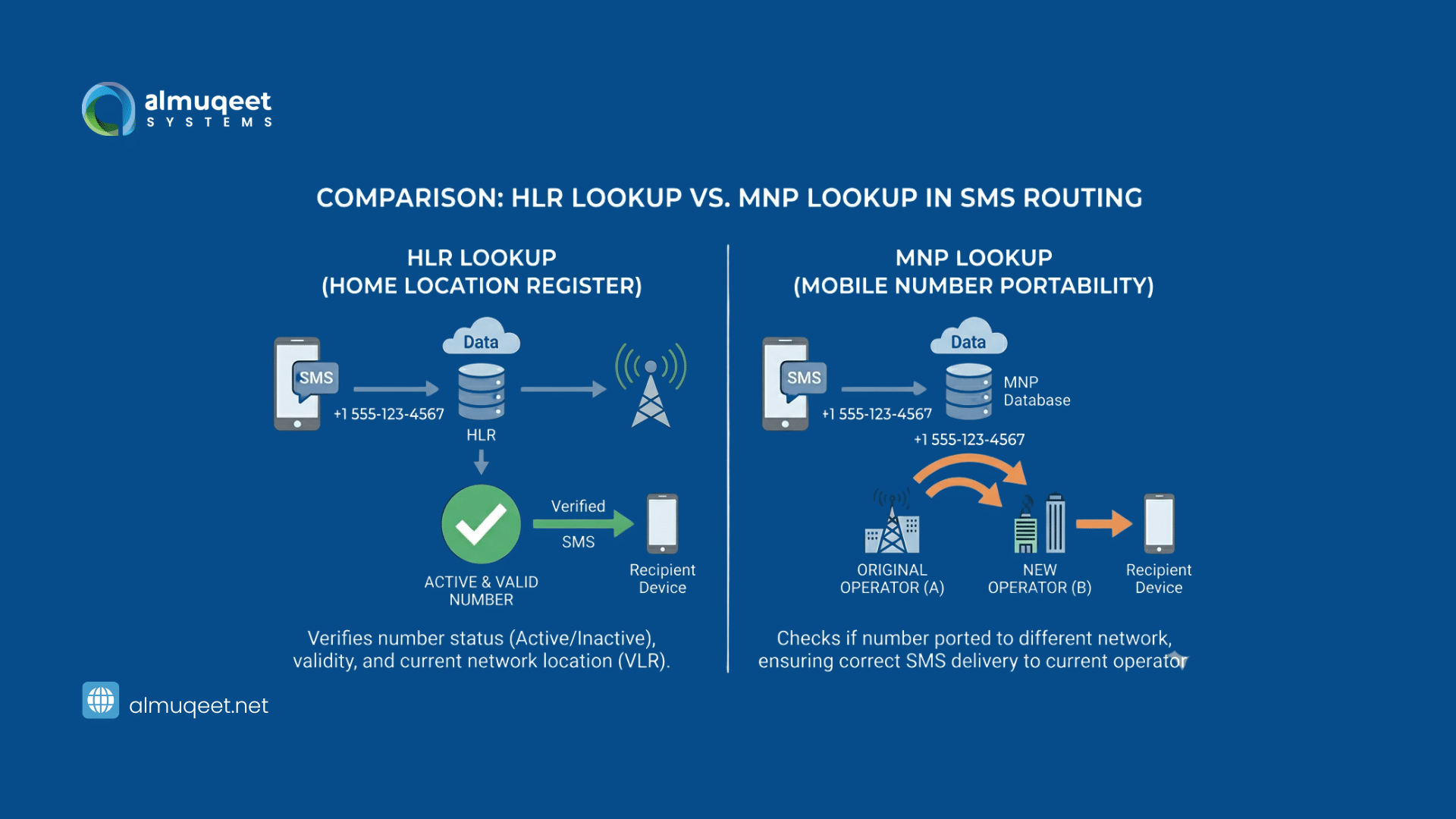 That gap between validation and routing is where the confusion around HLR Lookup vs MNP Lookup usually begins. They’re often grouped, sometimes even treated as interchangeable. But in practice, they sit at different points in the messaging flow. And when that distinction is ignored, the system doesn’t fail loudly, it drifts.
Where the Confusion Starts
HLR lookup and MNP lookup both deal with phone numbers, that’s where the similarity ends. HLR lookup is tied to the Home Location Register. It gives you a real-time view of whether a number is active, reachable, and which network it’s associated with at that moment. It’s often the first layer operators rely on when cleaning databases or verifying users before sending messages.
MNP lookup exists because numbers don’t stay where they started. It tracks whether a number has been ported from one operator to another and identifies the current serving network for routing purposes. At a glance, both seem to answer the same question.
Where should this message go? But they don’t.
And those are not the same thing.
HLR Lookup vs MNP Lookup: A Practical Comparison
| Aspect | HLR Lookup | MNP Lookup |
| Core Purpose | Validates if a number is active and reachable | Identifies if a number has been ported and its current operator |
| Data Source | Home Location Register (real-time subscriber data) | Portability databases (number porting records) |
| Best Use Case | Number validation, fraud detection, and database cleaning | Accurate operator identification for routing |
| Impact on Routing | Limited may not reflect the ported operator | High ensures a correct routing path |
| Accuracy in High-Portability Markets | Can be misleading if used alone | Critical for maintaining routing accuracy |
| Operational Role | First layer (validation) | Second layer (routing precision) |
| Common Mistake | Used for routing decisions directly | Ignored, leading to inefficient routing |
The table makes it look clean. In reality, the boundary between these two often gets blurred inside systems that evolve quickly.
Where HLR Lookup Works And Where It Quietly Falls Short
HLR lookup is reliable for what it’s designed to do, it filters out inactive numbers. It helps reduce unnecessary traffic. It improves campaign efficiency and protects systems from sending messages into voids. In many setups, it’s the first meaningful layer of intelligence applied before traffic enters the network.
You can see this more clearly in how operators use it for segmentation and optimization, something explored in our work around HLR-based targeting strategies. It’s effective because it answers a simple question quickly: Is this number worth sending to?
But HLR doesn’t always capture movement. When a number is ported, the original numbering range becomes less meaningful. HLR may still return valid data, but if routing decisions depend on outdated operator assumptions, things start to misalign. It doesn’t break immediately. It just becomes less precise.
MNP Lookup: The Layer That Fixes Direction
MNP lookup doesn’t validate numbers, it corrects the direction. It exists because telecom ecosystems don’t stay static. Users switch operators. Markets evolve. Regulatory frameworks enable portability at scale. And once that happens, routing based on number prefixes alone becomes unreliable. MNP lookup steps in to answer a very specific question: Where should this message actually be delivered right now?
This becomes critical in environments where routing decisions affect:
- Operator-specific pricing
- Delivery latency across networks
- Compliance rules tied to telecom partners
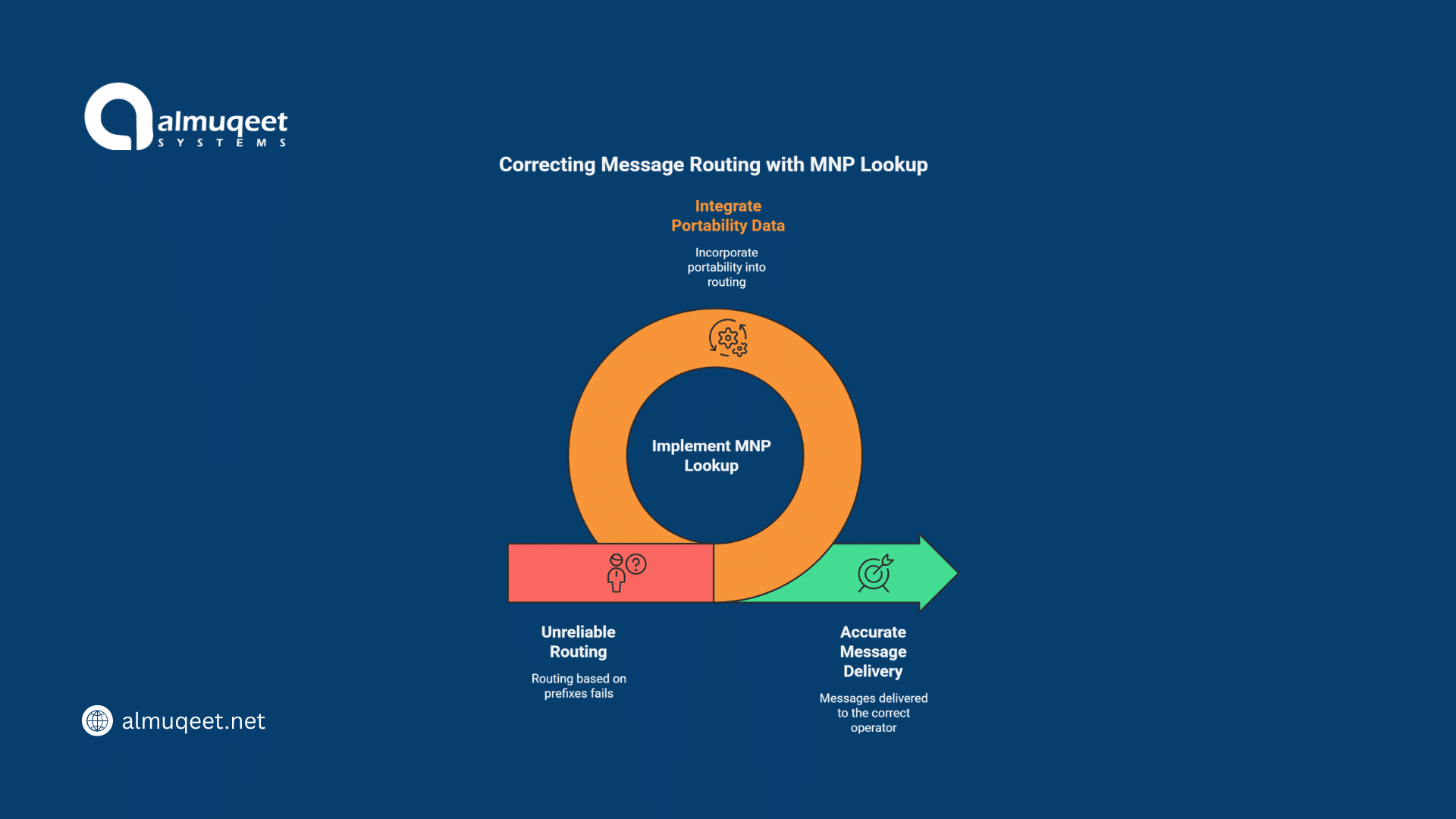 This becomes especially important when portability data is integrated into routing logic, ensuring messages are always directed to the correct operator.
The Moment It Turns Into an Operational Problem
Most systems don’t start with both HLR and MNP, they start simple. Prefix-based routing. Then validation gets added, usually HLR, and performance improves, and costs stabilize. Everything looks under control, then expansion happens. New regions, new operators, higher volumes. And suddenly, inconsistencies start to appear not everywhere, just enough to be noticeable.
A logistics platform sending delivery updates across multiple countries might see delays that don’t follow clear patterns. A fintech company might notice OTP failures concentrated in specific operator segments. A healthcare provider might experience intermittent delivery gaps during peak hours.
None of these points directly leads to a single failure. But they often trace back to the same root issue, routing decisions made without accurate, up-to-date operator data. That’s where MNP lookup stops being optional.
How the Two Fit Together in Practice
There’s a tendency to frame this as a choice of HLR or MNP. In practice, it’s a sequence. HLR lookup operates early in the flow. It filters, validates, and ensures that the system isn’t wasting resources. MNP lookup comes in later, refining routing decisions to match current network realities.
When both are used together, the system becomes more stable under variation. Not perfect, but more predictable. The flow tends to look something like this:
- HLR confirms the number is active and reachable
- MNP identifies the correct operator post-porting
- Routing logic selects the most efficient path based on both
This layered approach aligns closely with how modern messaging infrastructure is evolving, especially as explored in discussions around SMS routing mechanics and aggregation systems, as explored in A2P SMS routing explained, where routing decisions directly impact delivery success. It’s not about adding complexity. It’s about reducing ambiguity.
The Cost of Getting It Slightly Wrong
Most routing issues aren’t dramatic. They show up as small inefficiency messages taking longer than expected, costs creeping up across certain routes, and delivery reports that look fine but don’t reflect the real user experience, which is often explained by why A2P SMS delivery rates drop. Those small inefficiencies scale.
A few seconds of delay in OTP delivery becomes a failed login attempt. A slightly higher routing cost across millions of messages becomes a measurable margin loss. Inconsistent delivery erodes user trust in ways that dashboards don’t always capture. And because the system still “works,” these issues tend to persist longer than they should. That’s what makes the distinction between HLR and MNP lookup more than a technical detail. It’s operational clarity.
Why This Matters More Now
Messaging has shifted. SMS is no longer just a communication channel, it’s embedded into authentication flows, financial transactions, supply chain updates, and patient notifications. The tolerance for inconsistency has narrowed.
At the same time, telecom environments have become more dynamic. Portability is widespread. Routing ecosystems are layered. Pricing structures vary not just by country, but by operator and route quality.
In that context, precision isn’t a luxury. It’s a requirement. And the systems that perform consistently aren’t the ones with the most features. They’re the ones that understand where their data comes from and what it actually represents.
A Closing Thought
If you’ve spent time inside messaging systems, you start to recognize a pattern. Most problems don’t come from missing tools. They come from using the right tools in the wrong place. HLR lookup and MNP lookup aren’t competing solutions. They’re parts of the same conversation, one about validation, the other about direction. And the difference between the two doesn’t always show up immediately. But over time, it shapes how the entire system behaves.
If you’re refining your messaging infrastructure, this is one of those details worth getting right, not because it’s complex, but because it removes a layer of uncertainty that tends to grow quietly if left unchecked.
FAQs
Is HLR lookup enough for accurate SMS routing?
It can be sufficient in markets with low number portability. But in regions where numbers are frequently ported, relying only on HLR can lead to incorrect routing decisions.
When should MNP lookup be used?
MNP lookup becomes essential when routing accuracy depends on identifying the current operator, especially in international or high-portability environments.
Do HLR and MNP lookups increase delivery rates?
Indirectly, yes. By validating numbers and ensuring correct routing paths, they reduce failed deliveries and improve consistency.
Can using both increase costs?
There is a small cost to performing lookups, but it’s typically offset by savings from improved routing efficiency and reduced delivery failures.
Why do OTP messages fail without proper lookup integration?
Because messages may be routed based on outdated operator information, leading to delays or filtering at the receiving network.
Is this only relevant for telecom operators?
No. Any business sending high volumes of SMS, especially for authentication or transactions, benefits from accurate number intelligence and routing precision.