

How HLR Lookup Reduces SMS Costs with Number Verification

Messaging looks simple from the outside. A request goes in, a message comes out, and somewhere in between, a delivery receipt confirms success. Anyone who has operated messaging systems at scale knows that what sits between those two moments is where most of the cost and most of the failure live. It’s rarely the send button that breaks things. It’s the assumptions behind it.
Databases drift, numbers go inactive, users port across networks, and routing tables fall out of sync with reality. When that happens, messages don’t always fail loudly, they disappear quietly, still billed, still counted, still distorting your metrics.
HLR lookup sits in that gap between intention and delivery, not as a feature but as a control point. One that decides whether a message should be sent at all.
What is HLR Lookup?
At a technical level, HLR lookup queries the operator’s network to determine the current state of a mobile number, whether it’s active, reachable, roaming, or ported. This type of subscriber data is maintained within telecom network systems defined by standards bodies like GSMA. That’s where most explanations stop. In practice, it’s doing something more important. It’s correcting assumptions.
Messaging systems often rely on stored data lists built months ago, numbers collected during signups, and CRM exports that haven’t been validated since. The longer those datasets exist without verification, the more they diverge from the network’s actual state. And the network always wins.
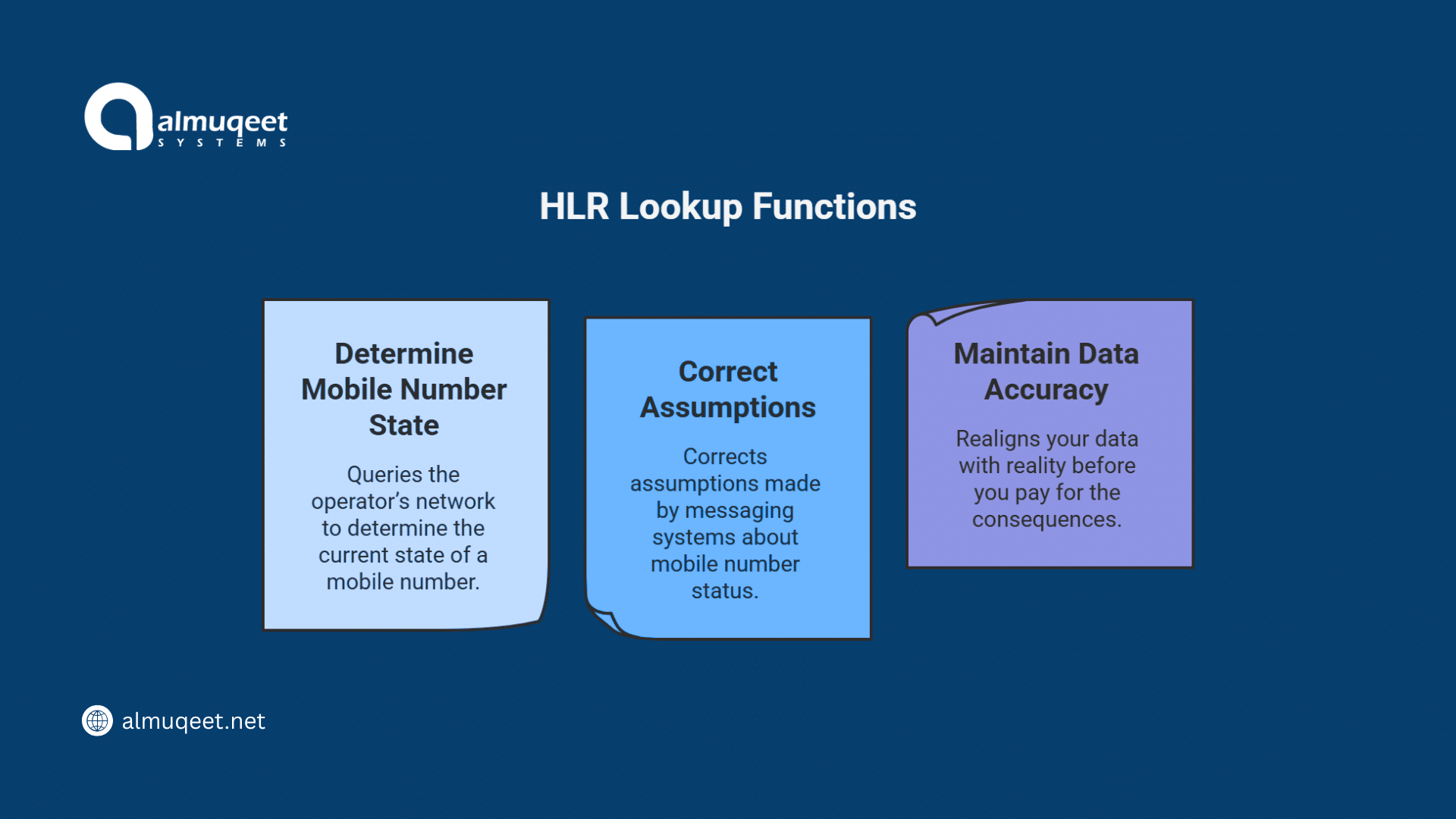 This is why number intelligence has become a foundational layer in modern messaging stacks. This is closely tied to how modern systems approach number validation, as explained in mobile number intelligence practices. Accuracy isn’t static, it needs to be maintained continuously. HLR lookup is one of the few ways to realign your data with reality before you pay for the consequences.
Why Messaging Costs Increase Without HLR Lookup
Sending messages without checking numbers leads to wasted money.
- Direct Costs: Every SMS that doesn’t reach a customer still costs. In the case of big campaigns, this may be thousands of dollars.
- Low Engagement: Messages that do not receive responses can distort performance data and decrease ROI.
- Wasted Effort: Staff or automated systems spend time managing failed messages.
- Customer Frustration: Constant failure may frustrate customers who are waiting to receive updates or OTPs.
To illustrate, in the case of a business that is sending 100,000 SMS messages without verification, it may end up wasting 5-10 percent of his/her budget. That adds up fast. HLR Lookup cuts these costs by ensuring only active numbers receive messages.
The Shift from “Sending Messages” to “Managing Reachability”
There’s a point where messaging stops being a feature and becomes infrastructure. It usually happens when the volume increases. A few thousand messages a day can tolerate inefficiency, a few million cannot. At scale, the question changes. It’s no longer “Can we send this message?” but “Should we send it at all?”
HLR lookup answers that question before cost is incurred. It filters out numbers that are no longer active, SIMs that have been decommissioned, and users who have moved networks without your system knowing. This becomes especially important in markets where users frequently switch operators. When that happens, routing assumptions break quickly. HLR lookup doesn’t replace routing logic. It stabilizes it.
How HLR Lookup Reduces Messaging Costs
HLR Lookup saves money and improves messaging efficiency in several ways.
Real-Time Number Verification: HLR Lookup checks the status of each phone number in real time. Active numbers are approved. Inactive or invalid numbers are filtered out. Messages are only sent to numbers that can actually receive them. This step alone prevents thousands of wasted messages in a single campaign.
Keeping Contact Databases Clean: Phone numbers change, expire, or move to new networks. Using HLR Lookup regularly removes outdated numbers. Businesses maintain a cleaner database and can target campaigns more effectively.
Reducing Failed OTPs: Many businesses send OTPs or authentication messages. Failed OTPs frustrate customers and increase support costs. HLR Lookup confirms numbers before sending OTPs, improving success rates.
Better Message Routing: Some networks require special routing for certain numbers, especially ported numbers. HLR Lookup identifies the correct network. Messages reach the recipient the first time, reducing retries and associated costs.
Protecting Sender Reputation: Frequent message failures harm your sender reputation. Messaging platforms may classify high-bounce numbers as spam. HLR Lookup reduces failures, keeps your reputation intact, and improves delivery rates.
HLR Lookup Use Cases
HLR Lookup isn’t just about saving money. It has practical applications in multiple industries.
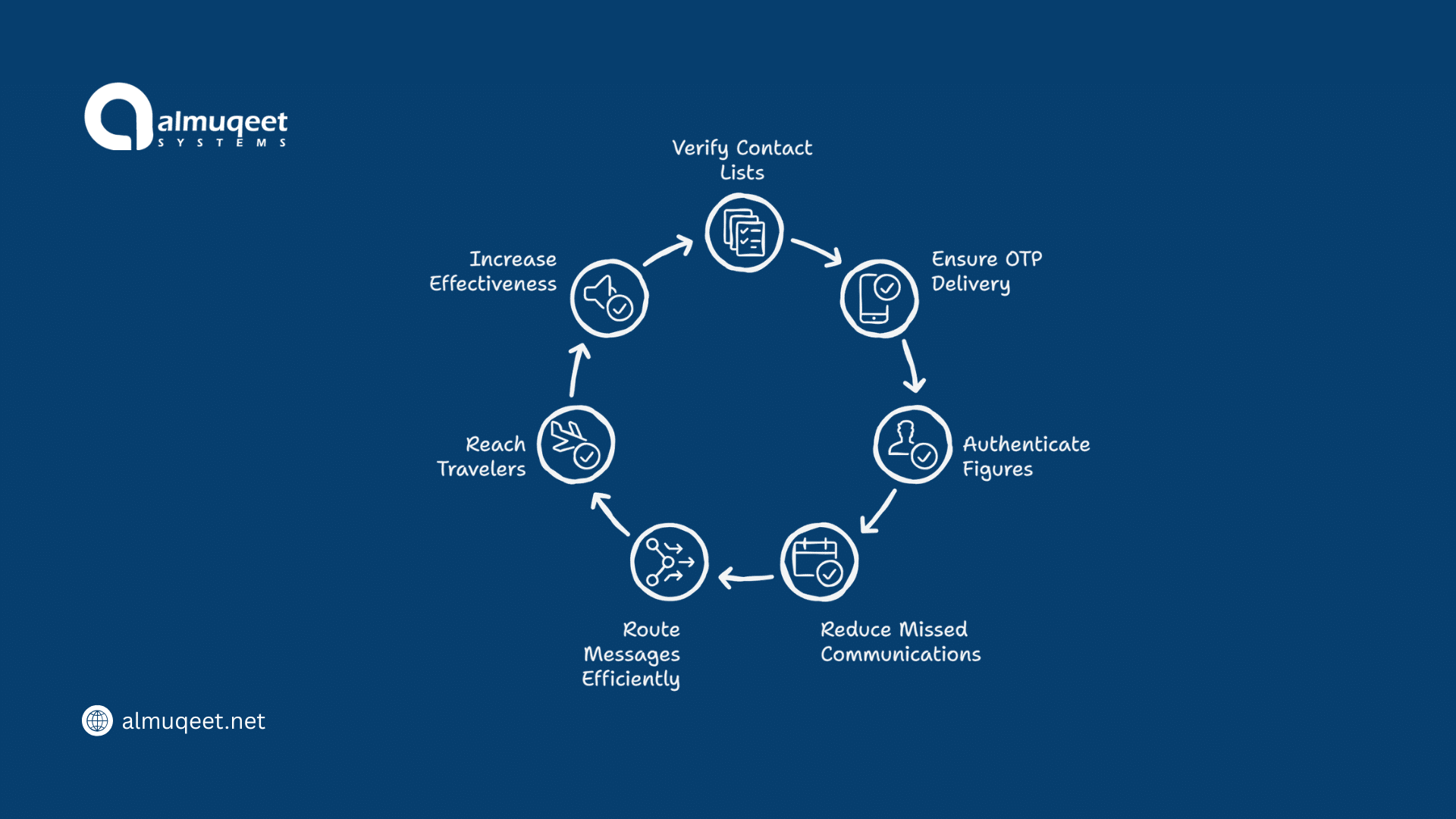 Marketing Campaigns: Businesses can verify large contact lists before sending offers or promotions. Only active numbers are messaged, improving ROI and engagement.
Banking and Finance: Banks rely on OTPs and transaction alerts. HLR Lookup ensures numbers are active, reducing failed transactions and support calls.
E-commerce: Retailers send order updates and delivery notifications. Authenticated figures ensure that the messages arrive at the customer in time, and fewer tickets are made on the support desks.
Healthcare: Hospitals and clinics send appointment reminders and prescription alerts. Active numbers reduce missed communications and help patients stay on track.
Telecom: Operators use HLR Lookup to detect ported numbers and route messages efficiently. This reduces failed deliveries and network strain.
Travel and Hospitality: Airlines and hotels send reservations and alerts. HLR Lookup ensures messages reach travelers, reducing missed check-ins or cancellations.
Government: Authorities sending urgent notifications, tax reminders, or public alerts rely on active numbers. HLR Lookup increases reach and effectiveness.
Where HLR Lookup Delivers the Most Value
Not every use case benefits equally. The impact is strongest where delivery reliability directly affects user experience or revenue. In practice, it matters most in:
- Authentication flows where OTP failures lead to drop-offs
- High-volume campaigns where small failure rates scale into real cost
- Global messaging where portability and routing complexity increase
- Time-sensitive alerts where delayed or failed delivery has operational consequences
These are the environments where messaging stops being transactional and starts becoming operational.
Real Examples
Example 1: Retail Campaign
One of the retail chains had a promotional SMS campaign scheduled for 200,000 customers. When HLR Lookup was not used, 10,000 messages were not received, and it cost them $3, 500. After integrating HLR Lookup, delivery rates reached 98%, saving thousands and improving engagement.
Example 2: Banking OTPs
A bank sends 50,000 OTPs daily. Failed OTPs caused support issues. With HLR Lookup, failures dropped below 1%, improving customer satisfaction and reducing support costs.
Example 3: Telecom Message Routing
A telecom company routes millions of messages. HLR Lookup detected ported numbers and adjusted routing. Messages that were not delivered due to failures reduced by 7% saving operations expenses and successful deliveries.
Cost-Benefit Analysis
Taking a business that sends 500,000 messages every month. Average cost per SMS is $0.03.
Without HLR Lookup:
5% fail → 500,000 × 5% × $0.03 = $750/month
Yearly loss: $750 × 12 = $9,000
With HLR Lookup:
Messages that are not passed on routes to 1% 500,000 1% 0.03 = 150/month.
Yearly savings: $9,000 − $1,800 = $7,200
These are direct savings in costs. Add better targeting, increased interaction, and reduced service calls, and the advantages increase.
Choosing the Right Implementation Approach
The effectiveness of HLR lookup depends less on the concept and more on execution.
A few things tend to matter more than what vendors highlight:
- Data freshness: stale lookup results defeat the purpose
- Global consistency: coverage gaps create blind spots
- Integration design: whether it sits inline or as a preprocessing layer
- Routing alignment: whether lookup data feeds into routing decisions
If these elements aren’t aligned, even accurate lookup data can be underutilized.
Conclusion
HLR Lookup is a practical way to reduce messaging costs. It verifies numbers, prevents failed messages, and ensures campaigns reach active recipients. Businesses save money, maintain better data, and increase engagement.
Almuqeet Systems provides HLR Lookup services worldwide. Their platform helps brands manage campaigns, validate numbers, and reduce wasted effort. Those who incorporate HLR Lookup in their companies record evident savings and efficiency in messaging.
HLR Lookup has a big impact on a small step of businesses sending thousands or millions of messages. Checking numbers prior to sending messages is cost-saving, reputation-protecting, and result-enhancing.
FAQs
Does HLR lookup slow down message delivery?
It can, depending on implementation. Real-time lookups may add slight latency, but caching or pre-validation can offset this.
Is HLR lookup necessary for small-scale messaging?
Not always. Its value increases significantly with volume.
How often should numbers be verified?
It depends on usage. High-frequency systems may be validated in real time, while others rely on periodic checks.
Can HLR lookup replace routing logic?
No. It improves accuracy but does not replace routing decisions.
Does it work globally?
Coverage depends on the provider. Global consistency is a key factor when choosing a solution.
What’s the most common mistake teams make?
Treating it as a one-time cleanup instead of an ongoing part of the messaging workflow.
Share this post