
Phone numbers were never supposed to be permanent. Carriers issued them, subscribers used them, and when someone switched networks, the number stayed with the old operator. That was the original design. Then regulators intervened. The logic was simple: if customers can’t take their number with them, switching carriers carries a hidden cost. Mobile number portability removed that friction. What it introduced, for anyone building on telecom infrastructure, was a routing problem.
The number looks the same, the format hasn’t changed. But the network behind it has. If your messaging platform doesn’t know that, it’s making routing decisions based on outdated assumptions. That gap between what a number looks like and where it actually lives is exactly what an MNP Lookup API solves.
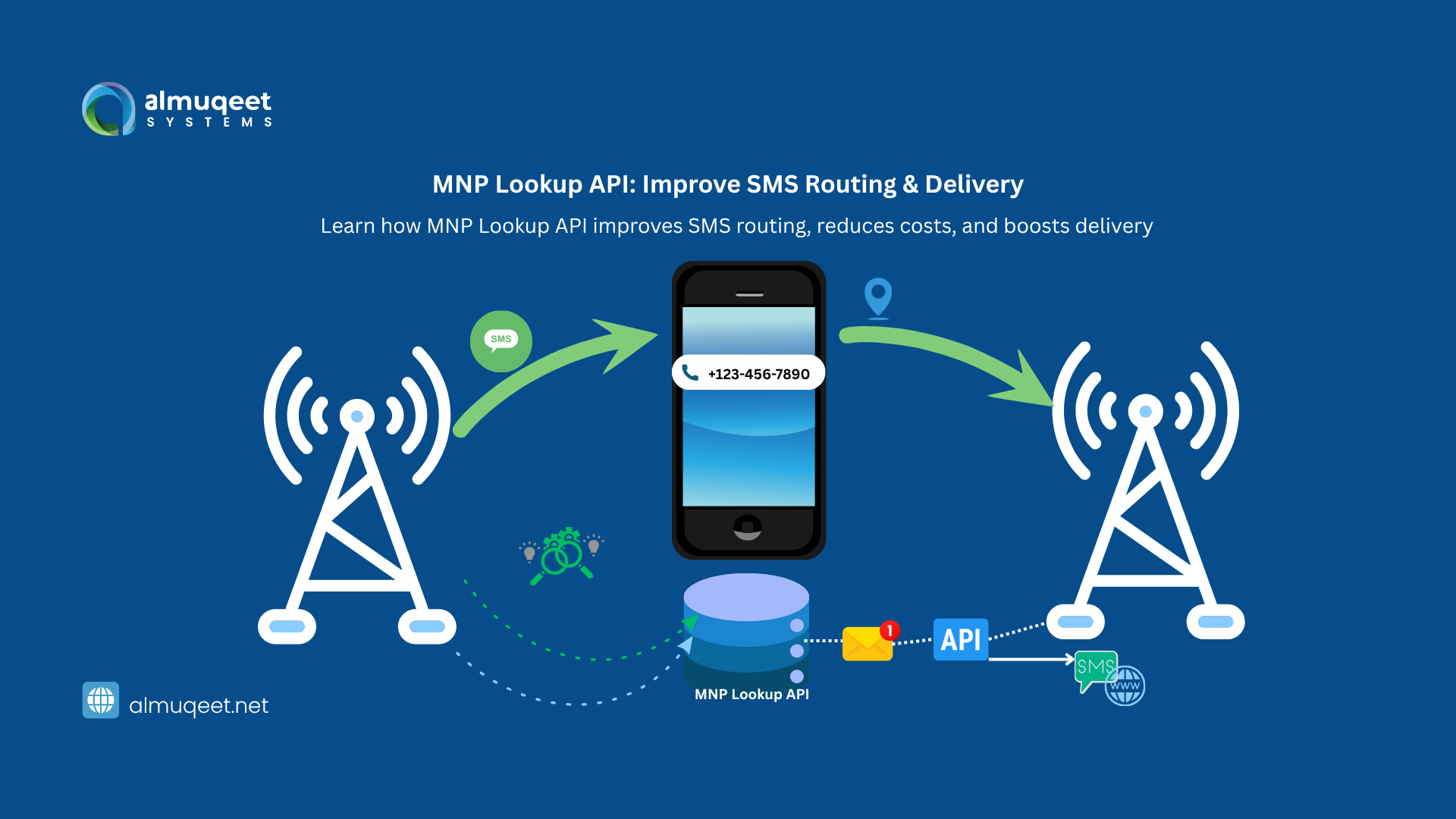 Most platforms discover this late, and delivery rates slip slightly. Retry queues grow, and latency increases without an obvious cause. By the time it’s traced back to porting data, the cost has already accumulated.
What Portability Actually Does to a Phone Number
When a subscriber ports their number, the digits stay the same, but the network association changes. There’s no visible indication. No prefix, no formatting difference. The information lives in centralized databases (like NPAC in North America or national regulators elsewhere). Carriers update these records, but timing varies. In some markets, updates are fast. In others, delays can stretch from hours to days.
In practice, this means a number’s “home network” may no longer be accurate. If your routing logic relies on prefixes, you’re routing based on where the number used to be, not where it is now.
Why This Becomes an Infrastructure Problem at Scale
At low volume, misrouted messages are manageable. They may still deliver or get retried. At scale, the impact compounds. If you’re sending millions of messages monthly and even 3–5% of numbers are ported, that’s a significant portion being routed incorrectly. Some messages cost more, some fail, and some are delayed.
For time-sensitive use cases like OTPs, delays are unacceptable. There’s also a billing impact. Misrouting often leads to incorrect inter-carrier charges, which erode margins over time. Using MNP lookup before routing prevents this from happening.
How an MNP Lookup API Actually Works
The API is simple to use. You send a phone number (MSISDN), and it returns:
- Current network
- Original network
- Porting status
- Country
Behind the scenes, it queries HLR systems or MNP databases, either in real time or from synced datasets.
- Real-time lookups: fresher data, higher latency
- Database lookups: faster, but slightly outdated
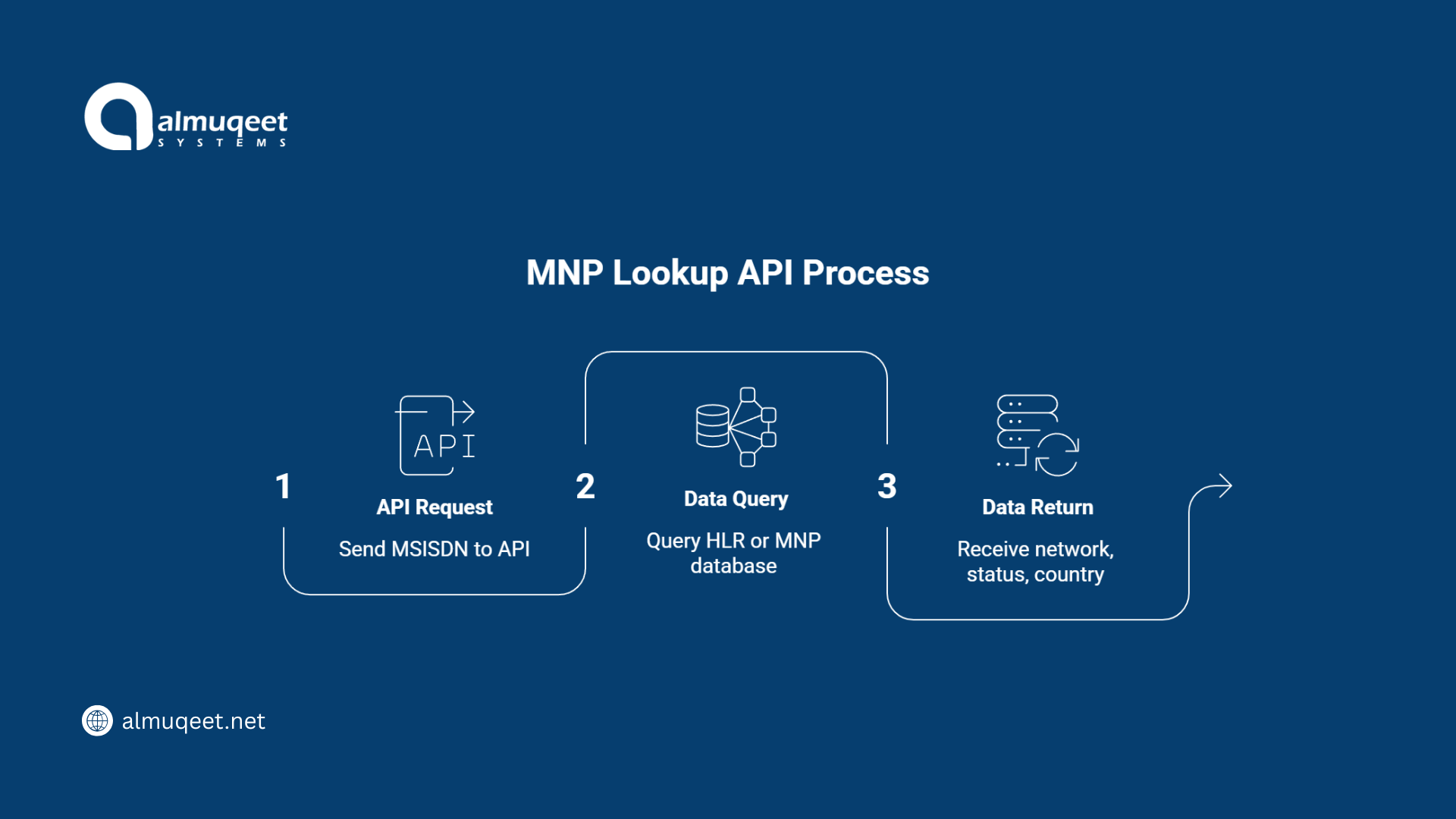 For bulk campaigns, database lookup is usually enough. For real-time messaging like OTPs, fresher data is preferred. These data points allow routing decisions to be made instantly, avoiding retries and failures.
Where It Performs Well and Where It Doesn’t
MNP lookup works best in markets with strong telecom regulation:
- US
- UK
- Germany
- Australia
In these regions, data is reliable and updated quickly. In some emerging markets, data consistency varies. Portability exists, but implementation may lag. In such cases, MNP lookup still helps, but results should be interpreted carefully. There’s also a latency consideration. Adding a lookup to real-time flows requires proper handling of timeouts, caching, and fallback logic to avoid creating a bottleneck
A Real-World Scenario: The OTP Problem
A fintech platform operating across multiple countries relied on prefix-based routing. Over time, delivery rates slowly declined. Not drastically, but enough to cause friction. After investigation, they found that some messages were being routed to original carriers instead of current ones. This caused delays and failures.
By adding MNP lookup before routing and updating their logic, delivery rates improved quickly. The issue wasn’t complex, the delay in identifying it was.
The Relationship Between MNP and HLR Lookup
These are often confused.
- HLR lookup checks if a number is active and reachable
- MNP lookup checks if the number has changed networks
Most modern APIs combine both, giving a complete view of the number status and routing.
When MNP Lookup Becomes Part of Your Compliance Stack
In regulated industries, delivery accuracy matters beyond performance. If a number has been reassigned or no longer belongs to the intended user, sending messages can create compliance risks. MNP lookup helps ensure messages reach the correct recipient and supports better validation practices.
Number reassignment is a related issue worth mentioning here. In some markets, numbers that have been inactive for a sufficient period are reassigned to new subscribers. A validation workflow that only checks whether a number exists without checking the current network association or activity status may deliver a message to someone who isn’t the intended recipient. For most marketing messages, this is a nuisance. For financial alerts or healthcare notifications, it has compliance implications.
An MNP Lookup API embedded in your pre-send workflow, particularly for high-sensitivity communication types, gives you a verification checkpoint that demonstrates due diligence. Not as a legal shield, but as evidence that your infrastructure is built with appropriate care about who is actually receiving messages.
Choosing a Provider That’s Built for Your Traffic Pattern
Accuracy is important, but operational performance matters just as much.
Things to consider:
- Data freshness
- Response latency
- Uptime and SLA
- Data sourcing quality
A provider with fewer but well-maintained markets is often more reliable than one with broad but outdated coverage.
Getting the Routing Logic Right
MNP lookup solves one part of the problem. Routing logic completes it.
You need to handle:
- Unknown network responses
- Fallback routes
- Timeouts
- Cache management
The most stable systems treat MNP lookup as core infrastructure, not an optional feature.
Final Note
MNP lookup addresses a simple but critical gap, the difference between how a number appears and where it actually belongs. At scale, ignoring that gap leads to delivery issues, higher costs, and operational inefficiencies. Done right, it becomes a core part of a reliable messaging infrastructure.
Frequently Asked Questions
How often do numbers port?
In competitive markets, up to 5–10% annually.
Is MNP lookup the same as validation?
No. Validation checks format; MNP checks network reality.
How fresh should data be?
24–48 hours for bulk, near real-time for transactional use.
Can it detect inactive numbers?
Not fully, HL R lookup is needed for that.
Does it add latency?
Typically 50–200ms, manageable with proper implementation.