
People often assume that sending SMS messages at scale is a simple process. An application triggers a message, the gateway forwards it, and the user receives it. For small volumes, that assumption mostly holds true. The system runs smoothly, and the delivery path rarely becomes a topic of discussion. Things start to change once traffic grows. A platform that once sent a few thousand notifications a day might suddenly be responsible for hundreds of thousands of messages. New campaigns are launched, authentication systems expand, and operational alerts become part of everyday workflows. What used to be a straightforward messaging setup slowly turns into a much larger infrastructure challenge.
At that stage, the focus shifts away from the application generating the messages and toward the network layer carrying them. Which operator connection should handle the traffic? How should messages be distributed across routes? What happens when certain networks become slower during peak hours? These are the kinds of questions messaging teams begin dealing with as their systems scale. And this is usually the moment when an SMS gateway stops being viewed as a simple messaging tool and starts being treated as a core part of the telecom infrastructure behind modern A2P communication.
By 2026, SMS is deeply embedded in how digital services operate. Authentication flows depend on it. Logistics networks coordinate through it. Retailers launch campaigns through it. And behind each of those messages is a routing decision that determines whether communication feels instant or unreliable.
What Is A2P SMS Routing?
At its core, A2P SMS routing describes how messages created by applications travel through telecom networks until they reach a mobile phone. Unlike traditional texting between individuals, A2P messages originate from software systems. Banks send verification codes. Airlines notify passengers about flight updates. E-commerce platforms confirm purchases and delivery windows.
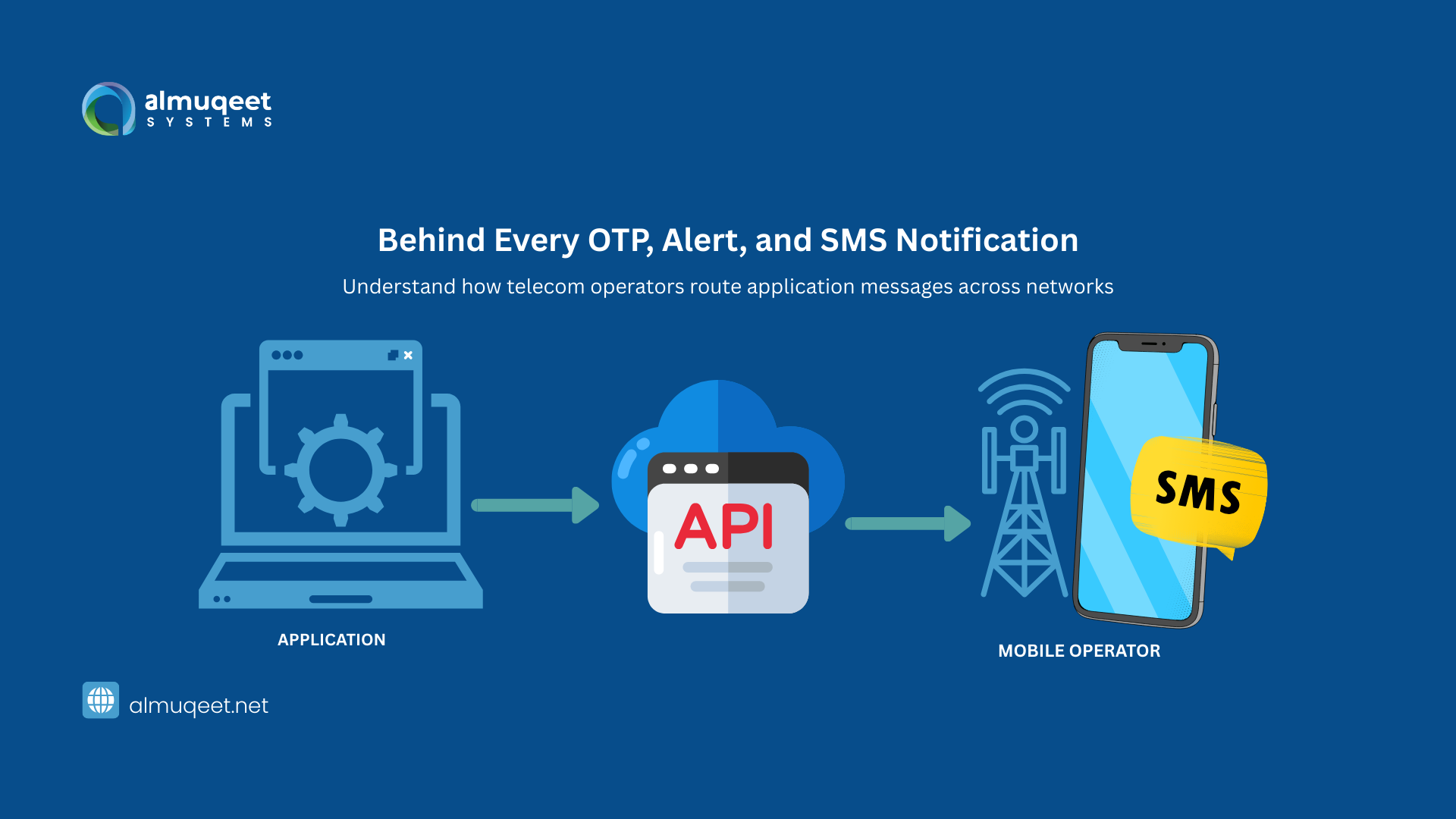
When an application triggers one of these messages, it doesn’t send it directly to the recipient’s network. Instead, the request passes through messaging infrastructure, usually an SMS gateway, hub, or routing platform connected to multiple telecom operators. That infrastructure decides where the message should go.
It evaluates available routes, carrier connections, and network conditions before forwarding the message toward the destination operator. In simple environments, this process happens quickly and quietly. But as message volumes increase, routing decisions become far more important. A route that worked perfectly yesterday might start showing delays today because traffic shifted somewhere upstream. Routing systems need to adapt constantly. That adaptability is what separates small messaging tools from true telecom infrastructure.
A2P SMS Routing for Two-Factor Authentication Systems
Few use cases expose routing weaknesses faster than authentication. Two-factor authentication relies heavily on SMS because it’s universal. Almost every user has a mobile number, and receiving a verification code requires no additional apps or accounts. But authentication traffic behaves differently from most other messaging.
When a large platform launches or a popular app experiences a surge in logins, OTP requests arrive in bursts. Thousands of users might request verification codes within seconds. Each one expects the message to appear instantly. If the code arrives late, users request another one. Suddenly, traffic doubles.
Routing systems need to absorb that pressure without introducing delays. Operators managing authentication traffic usually watch a few signals very closely: delivery latency, retry rates, and throughput limits across carrier connections. When those signals drift even slightly, the impact becomes visible almost immediately.
When Marketing Traffic Changes the Equation
Marketing campaigns create a different type of stress on the messaging infrastructure. Authentication traffic is unpredictable but continuous. Marketing campaigns are sudden and heavy. A retailer launching a weekend promotion might push hundreds of thousands of messages within minutes. Travel companies announcing seasonal discounts often do the same. For routing infrastructure, this kind of activity changes the problem.
It’s no longer just about latency. It’s about throughput. Messages need to move quickly through queues without overwhelming individual routes. If too much traffic flows through a single path, congestion forms and delivery speed drops. From the outside, the system still appears operational. Messages continue to move. They just arrive slower than expected. Operators who have seen large campaigns unfold know how quickly routing performance can change during these events.
How Operators Optimize A2P SMS Routing at Scale
Once messaging systems reach large volumes, routing stops being a static configuration. It becomes an ongoing operational task. Experienced operators tend to rely on a few practical strategies to keep traffic moving smoothly.
- Spreading traffic across multiple carrier routes
- Monitoring delivery latency across networks
- Prioritizing time-sensitive traffic like authentication messages
- Adjusting routing paths when performance begins drifting
None of these measures guarantees perfect delivery conditions. Telecom networks are complex systems, and conditions change constantly. But they provide enough flexibility for operators to react before delays begin affecting users. Routing infrastructure works best when it can adapt quietly in the background.
Why Many Operators Use Multiple Routing Vendors
Another pattern appears as messaging environments grow: reliance on more than one routing provider. Single-vendor setups are easier to manage at smaller scales. But when messaging traffic becomes critical to business operations, depending on one provider can introduce unnecessary risk. Different vendors maintain different operator connections. Some routes perform better in certain regions. Others handle specific traffic types more efficiently.
Using multiple routing partners creates alternatives. If one route slows down or becomes unavailable, traffic can shift elsewhere. Of course, this approach introduces complexity. Operators need stronger monitoring systems and clearer traffic management policies. But for environments sending large volumes of authentication or operational alerts, redundancy usually outweighs the additional effort.
Top-Rated A2P SMS Routing Platforms with Global Reach
Companies evaluating A2P SMS routing platforms tend to focus on a few structural characteristics rather than surface-level features. Global reach is one of the most important. Messaging systems that operate across multiple regions need reliable connectivity with a wide range of mobile operators. Delivery transparency also matters. Teams responsible for messaging infrastructure want visibility into how traffic moves through networks and how routes perform under load.
Platforms designed for telecom operators often provide deeper routing control than standard messaging APIs. Instead of simply forwarding traffic, they allow operators to manage routes, monitor performance, and adjust traffic flows as conditions change. That level of control becomes more valuable as messaging environments scale.
Where to Buy A2P SMS Routing APIs for App Integration
For most applications, messaging capabilities begin with an API integration. Developers connect their systems to messaging infrastructure using REST APIs or SMPP connections. Once integrated, applications can generate SMS messages automatically when certain events occur, such as account registrations, password resets, delivery confirmations, or service alerts.
Organizations searching for A2P SMS routing APIs typically evaluate providers based on operational reliability. Carrier connectivity is one factor. Delivery consistency is another. Platforms that handle traffic spikes gracefully tend to perform better when messaging becomes part of a product’s core functionality. Because once authentication systems or operational alerts depend on SMS, the routing layer becomes a critical part of the overall platform.
Comparing Pricing for A2P SMS Routing Services
Pricing across the A2P messaging ecosystem varies widely, and for good reason. Every message eventually reaches a mobile operator network, and those networks charge termination fees that differ by region. Routing paths also influence pricing. Direct carrier routes usually offer faster delivery but may cost more than indirect routes that involve additional intermediaries.
Message volume plays a role as well. High-volume senders often negotiate better rates than smaller businesses sending occasional campaigns. Operators evaluating routing providers usually weigh price alongside delivery performance. Lower costs mean little if routing delays begin affecting authentication systems or time-sensitive notifications. In messaging infrastructure, reliability often carries as much weight as cost.
Average Cost per Message for A2P Services
The average price of A2P SMS messages depends largely on destination networks and traffic volume. Domestic messaging within major markets tends to be relatively inexpensive. International routes typically cost more because they involve additional carrier agreements and cross-network interconnections. Some authentication systems also rely on premium routes designed for faster delivery and stronger reliability guarantees.
Wholesale messaging providers often structure pricing in tiers, where higher traffic volumes reduce the per-message cost. For organizations sending millions of messages each month, even small improvements in routing efficiency can significantly reduce operational expenses.
A Real-World Scenario: When Traffic Surges Overnight
A logistics platform once introduced automated SMS alerts to update drivers about dispatch changes. At first, the system generated only a few thousand messages per day. Everything worked smoothly. Then the alerts were integrated deeper into the company’s fleet management software. Every scheduling adjustment and route update began triggering notifications. Within weeks, message traffic exceeded two hundred thousand messages daily.
Morning dispatch hours exposed the problem quickly. Drivers began receiving updates late, sometimes after leaving the warehouse. The application hadn’t changed. The routing infrastructure simply hadn’t been designed for that scale. Once the company expanded its routing environment and distributed traffic across additional carrier connections, delivery delays disappeared. The messaging system looked identical from the outside. Underneath, the infrastructure was completely different.
Why A2P SMS Routing Matters More in 2026
Messaging has gradually shifted from a communication channel to an operational layer inside digital services. Five years ago, SMS notifications were mostly informational. Today, they secure user accounts, coordinate logistics networks, confirm payments, and support customer service workflows. That change raises the stakes for routing reliability.
When A2P SMS routing works well, users rarely notice it. Messages arrive instantly, systems behave predictably, and authentication flows feel seamless. But when routing begins drifting even slightly, those small delays ripple across systems that depend on real-time communication. For telecom operators and messaging providers, improving routing reliability is rarely about sending more messages. It’s about making sure the ones that matter arrive exactly when they should.
Frequently Asked Questions
What does A2P SMS routing mean in telecom networks?
A2P SMS routing is the process of delivering messages generated by software applications to mobile users through telecom networks using messaging gateways and routing platforms.
How is A2P SMS different from normal texting?
Normal texting involves communication between two mobile users. A2P SMS messages originate from applications such as banking systems, authentication platforms, or notification services.
Why is A2P SMS routing important for authentication systems?
Authentication systems depend on fast message delivery. Reliable routing ensures verification codes reach users quickly and prevents delays that could interrupt login processes.
What factors affect A2P SMS delivery speed?
Delivery speed can be influenced by carrier connectivity, routing paths, network congestion, and message volume during peak traffic periods.
Can A2P SMS routing support large marketing campaigns?
Yes. Messaging platforms designed for bulk traffic can distribute campaign messages across multiple routes to maintain delivery speed and avoid congestion.
Why do telecom operators work with multiple routing vendors?
Using multiple vendors provides routing redundancy and flexibility. If one route slows down or fails, traffic can be redirected through alternative paths to maintain delivery reliability.