
Every messaging operator has seen this happen. The network is running smoothly, messages are delivering on time , nothing looks wrong. Then suddenly, a big campaign launches in multiple countries at once. A bank pushes thousands of OTPs after a login surge, delivery receipts start coming back slowly, some messages take longer than expected. Nothing is officially “down” but something isn’t right. That’s when an SMS hub stops being just a technical concept and becomes something very real.
 By 2026, an SMS hub isn’t just about international interconnection. It’s about control under pressure, especially in high-growth markets where A2P traffic has expanded faster than routing governance. Businesses don’t see routing tables. They see one thing: whether the message arrives and on scale, the path a message takes matters more than most people think.
What an SMS Hub Actually Means in Practice
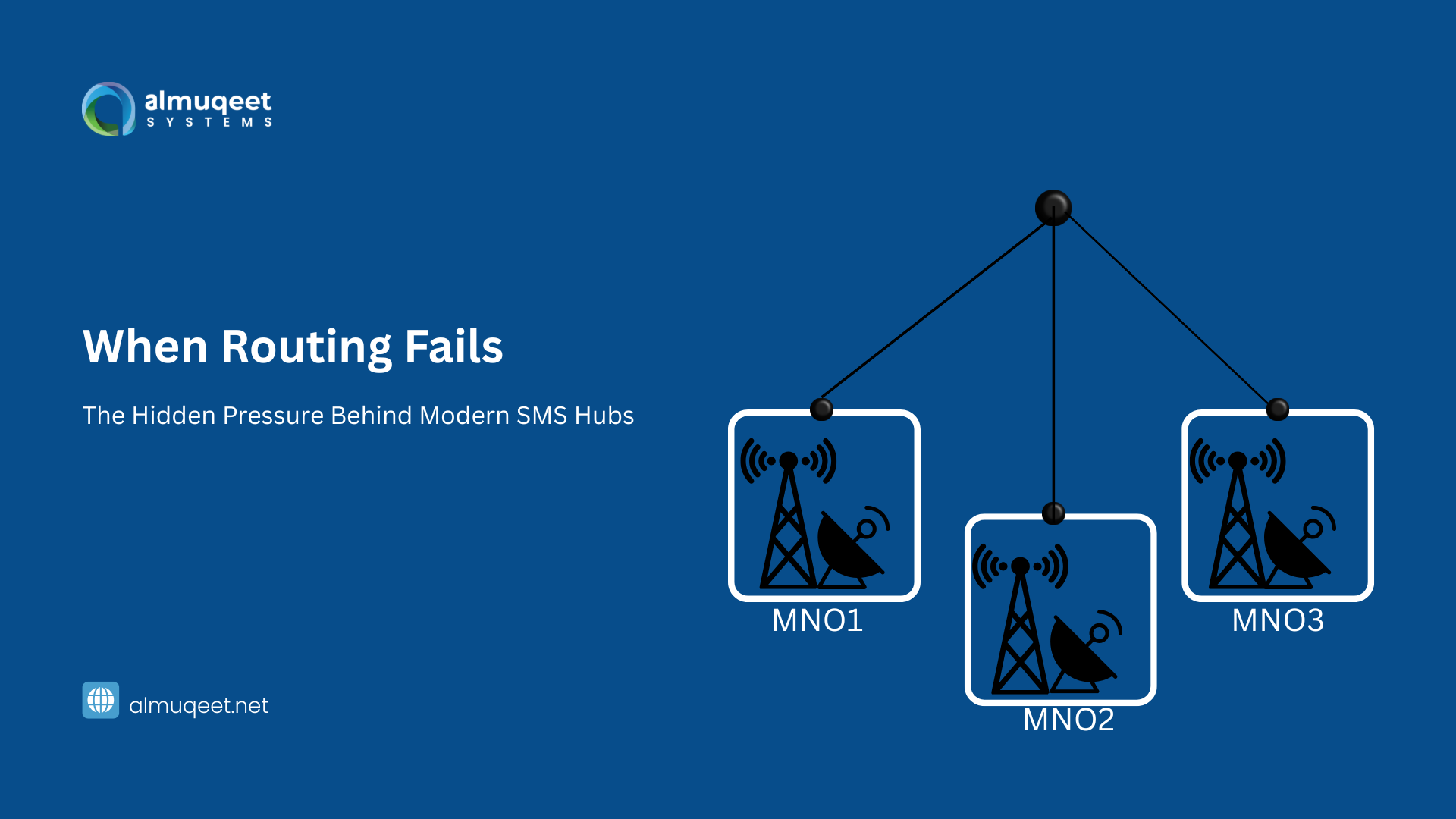
At its core, an SMS hub is a centralized interconnection model that allows multiple mobile network operators (MNOs), aggregators, and enterprises to exchange traffic through a single structured routing layer rather than dozens of bilateral agreements. On paper, it sounds like efficiency in operations, it’s about reducing fragility.
Without a hub, operators negotiate direct connections with each other. Each route has its own commercial agreement, technical setup, and performance profile. It works until volume grows or traffic patterns shift unexpectedly.
With a hub, traffic flows through a managed switching environment. Routing logic, monitoring, settlement, and filtering sit in one place. It isn’t glamorous infrastructure. But it changes how networks behave under stress.
In international A2P environments where traffic often traverses multiple intermediaries, a structured hub can mean the difference between predictable OTP delivery and random latency spikes during peak campaigns.
How an SMS Hub Works When Traffic Scales
- From the outside, a message looks simple:
- application – network – handset.
- Internally, it’s layered.
An enterprise sends traffic via API or SMPP into a gateway or aggregation layer. That traffic enters a hub’s routing engine. The hub decides:
- Which operator or downstream partner to use
- Whether the route is compliant
- How to balance throughput versus latency
- Whether fallback logic should apply
That routing engine is constantly making decisions based on live network behavior. Under moderate traffic, almost any route works. Under high concurrency imagine a fintech app pushing OTP bursts during a major campaign, weaker routes start to surface. Queues build, DLRs lag, Retries multiply. A well-designed hub absorbs that variability. A poorly structured one amplifies it. This is where an SMS hub shifts from convenience to infrastructure.
Architecture: What Sits Behind an SMS Hub
Most marketing diagrams oversimplify hub architecture. In reality, several core layers determine performance:
- Session Management Layer – Handles SMPP or HTTP connectivity, throughput control, and session stability.
- Routing Intelligence Engine – Applies logic based on cost, quality, and compliance rules.
- Filtering & Compliance Controls – Blocks grey routes, unauthorized sender IDs, or regulatory violations.
- Monitoring & Reporting Layer – Tracks DLR accuracy, latency trends, and operator response behavior.
These layers interact continuously.
If session control is weak, throughput collapses under burst traffic. If routing logic lacks intelligence, the cheapest routes override quality. If compliance filters are absent, regulatory exposure increases, especially across cross-border traffic.
This is why many operators integrate SMS hub architecture with firewall capabilities. When traffic crosses international boundaries, routing governance becomes as important as connectivity.
SMS Hub vs SMS Aggregation: A Practical Difference
People often conflate an SMS hub with SMS aggregation. They overlap, but they’re not identical. Aggregation primarily pools traffic from enterprises and distributes it across operator connection, it focuses on volume efficiency. A hub focuses on interconnection governance and structured routing between networks.
Aggregation answers: How do I send large volumes cost-effectively?
A hub answers: How do networks exchange traffic without instability?
Many providers advertise “bulk SMS packages” that are essentially aggregation services. Some operate on top of hub models. Others rely on unstable or indirect international routes. When evaluating bulk messaging solutions, the real question isn’t just price per SMS. It’s whether routing is structured, compliant, and monitored in real time. Pricing and routing discipline are tightly linked.
Where an SMS Hub Performs Well And Where It Struggles
An SMS hub shines in multi-operator environments. Centralized routing reduces duplicated agreements and improves transparency.
It performs well when:
- Traffic is predictable but high volume
- Compliance enforcement is strict
- Cross-border interconnection is common
- Enterprises require reporting clarity
It struggles when hubs over-optimize for cost. That’s when fallback routes degrade quality. That’s when delivery receipts become unreliable. And that’s when enterprises blame “SMS” instead of the routing architecture. In 2026, reliability is brand equity a failed OTP during checkout isn’t an inconvenience; it’s churn.
Integrating an SMS Hub With an E-Commerce Platform
For e-commerce businesses, whether running Shopify storefronts, custom builds, or global marketplaces, integration typically happens through API or SMPP via a gateway connected to a hub. Technically, it’s straightforward. Operationally, it requires discipline. Traffic patterns are bursty. Order confirmations cluster around sales events, OTP spikes during login campaigns. Promotional traffic can conflict with transactional priority if not separated at the routing level.
When integrating, consider:
- Segregating transactional and promotional traffic
- Setting throughput limits aligned with operator caps
- Monitoring DLR latency during peak hours
- Testing failover behavior before live campaigns
Integration isn’t the hard part. Managing behavior under load is.
Affordable SMS Hub Solutions for Startups:
Startups often ask where they can find affordable SMS hub solutions. Affordability isn’t just per-message cost. It’s operational overhead. A low-rate provider that delivers inconsistent OTPs creates customer support escalations. That cost is invisible until scale reveals it.
For early-stage businesses, look for:
- Transparent routing policies
- Clear compliance adherence to telecom regulations
- Stable API/SMPP session handling
- Accurate delivery reporting
Sometimes, the better decision is starting with a managed wholesale SMS platform that already integrates hub logic, rather than attempting fragmented operator connections.
Best SMS Hub Services for Businesses
There’s no universal “best” SMS hub provider, it’s only the one that fits your traffic behavior, regulatory exposure, and growth curve. Fintech platforms should prioritize low-latency routing and strict compliance controls. Retail brands need scalable throughput and clean separation between promotional and transactional traffic. Logistics companies depend heavily on delivery receipt accuracy. Healthcare and education institutions require regulatory alignment and sender ID governance.
Regulatory oversight around international routing and sender ID authorization continues to tighten globally. Any SMS hub service that cannot clearly explain how it manages route validation, filtering, and compliance introduces long-term operational risk.
Infrastructure-focused providers, including companies like Almuqeet Systems that operate at the intersection of SMS hub architecture, aggregation, and routing intelligence, approach messaging as telecom infrastructure rather than just bulk delivery. That difference becomes visible under scale, when traffic surges or regulatory checks intensify.
The safest way to evaluate a provider isn’t by rate sheets. It’s a technical conversation. Ask how routing decisions are made, ask what happens when a route degrades, test during peak windows. Marketing brochures rarely reveal how a system behaves at ten times normal load.
A Real-World Scenario: When Routing Breaks Under Pressure
A regional fintech client once ran a promotional wallet cashback campaign tied to account logins. Traffic increased sixfold in under an hour, the hub routing engine handled the volume, but one downstream international route silently degraded. Latency increased from three seconds to eighteen seconds, nothing technically failed, but OTP expiry windows did. The issue wasn’t throughput, it was route quality weighting in the routing algorithm. Cost bias overrode performance bias,that day reinforced something simple, an SMS hub isn’t just about connectivity. It’s about intelligent routing discipline. And discipline is visible only when tested.
Why an SMS Hub Matters More in 2026
Messaging traffic has matured, it’s no longer just promotional bulk SMS. It’s financial authentication, healthcare alerts, logistics verification, and educational notifications. Each of these carries operational dependency. As digital adoption accelerates globally, messaging infrastructure is becoming systemic infrastructure, casual routing decisions now have systemic consequences. That’s why an SMS hub, when designed and governed properly, shifts from optional efficiency to foundational control.
Final Thoughts
An SMS hub isn’t a feature set, It’s a structural decision. You can treat messaging as a commodity, or you can treat it as infrastructure. As volumes grow and regulatory scrutiny increases, the difference becomes visible in delivery reliability, cost stability, and operational calm during peak traffic. If you’re evaluating your messaging stack, don’t just ask what it costs. Ask how it behaves under pressure. That answer tells you everything.
FAQs
What is an SMS hub in simple operational terms?
It’s a centralized interconnection model that allows multiple operators and aggregators to exchange SMS traffic through structured routing logic instead of individual bilateral connections.
Is an SMS hub necessary for small businesses?
Not directly. Small businesses usually connect through a gateway or aggregator. But that provider’s use of structured hub routing affects reliability as traffic grows.
How is an SMS hub different from bulk SMS services?
Bulk SMS services focus on sending volume from businesses. An SMS hub focuses on how networks exchange traffic behind the scenes.
Can an SMS hub improve delivery rates?
Yes, when routing logic prioritizes quality and compliance. Poorly managed hubs can degrade delivery if cost overrides performance.
How long does integration typically take?
API integration can take days. Optimizing routing behavior under load takes testing cycles and monitoring beyond initial deployment.
Does an SMS hub eliminate grey routes?
Not automatically. It provides the structure to control and filter them, but enforcement depends on routing policy and firewall integration.